
Health
Best Probiotic for Women: How to Choose the Right Strain for Gut, Vaginal, and Urinary Health


Choosing the best probiotic for women is not really about finding one magic bottle that works for everyone. It is about choosing the right strain, the right purpose, and the right quality for your body and your goals. That is why women often look for probiotics for gut comfort, vaginal balance, urinary support, or everyday wellness, yet the smartest choice depends on the exact problem they want to address.
Research on women’s health probiotics has paid special attention to strains such as Lactobacillus rhamnosus GR-1 and Lactobacillus reuteri RC-14, because these strains have been studied in relation to vaginal flora and bacterial vaginosis. At the same time, the science is still developing, and evidence does not mean every product with the word “women’s” on the label will deliver the same results.
One of the biggest mistakes people make is assuming all probiotics work the same way. NCCIH explains that different probiotic types can have different effects, and even within the same group, one strain may help a condition while another does not. NCCIH also notes that probiotics have shown promise for some uses, such as antibiotic-associated diarrhea, but for many other claims, strong scientific evidence is still lacking. That is important for women because many marketing claims around vaginal health, immunity, bloating, and “balance” are broader than the research actually supports.
Safety matters too. NCCIH says probiotic products may have few side effects for many people, but long-term safety data are limited, and the risk of serious side effects can be greater in people with underlying health conditions. NCCIH also advises talking with a health care provider before starting a probiotic supplement and not replacing proven treatments with unproven products. That is especially important if symptoms suggest a vaginal infection, recurrent bacterial vaginosis, persistent digestive issues, pregnancy-related concerns, or any condition that needs medical evaluation rather than self-treatment.
When you are comparing products, the best probiotic for women usually has a clear strain list, a stated dose, a reason for use, and a brand that explains why the formula was designed for women’s health. A strong product page or label should tell you whether it is meant for gut support, vaginal support, or a general wellness routine, because those are not interchangeable goals. It should also explain storage instructions, how to take it, and whether it uses well-studied strains rather than vague proprietary blends.
If you are writing this article for SEO, the best structure is simple: start with the exact keyword, explain what the reader means by “best probiotic for women,” break down the main use cases, and then give a practical buying guide that covers strains, dose, and safety. Search engines tend to reward content that directly answers the query and also covers related intent, such as “which probiotic strains are best,” “does it help vaginal health,” and “how do I choose a supplement.”
What to look for in the best probiotic for women
The first thing to look for is the strain name, not just the species name. For example, “Lactobacillus” alone is not enough information, because different Lactobacillus strains can behave differently in the body. That is why the research on women’s health often focuses on named strains such as GR-1 and RC-14 rather than general terms. The second thing to look for is whether the product explains its purpose clearly, because a probiotic designed for digestion is not automatically the best choice for vaginal health.
You should also think about consistency and realism. Probiotics are not instant fixes, and they are not a replacement for treatment when a medical condition is present. Some studies have found promising results for specific probiotic approaches in women, especially around vaginal microbiota and bacterial vaginosis, but other studies have shown limited or mixed results depending on the population and treatment design.
Why women search for probiotics
Women usually search for probiotics because they want support for one of three things: digestive comfort, vaginal balance, or overall wellness. The gut is often the first place people think about because probiotics are commonly used there, and there is some evidence for help with antibiotic-associated diarrhea. Vaginal health is another major reason because a healthy vaginal microbiome is commonly Lactobacillus-dominant, and changes in that balance are linked with issues such as bacterial vaginosis.
Best probiotic strains often discussed for women
These strains have been studied in relation to vaginal flora and bacterial vaginosis, and some studies reported benefits, while others found more limited effects depending on the clinical setting. That is a good reminder that the best probiotic is not the one with the most impressive advertising, but the one whose strains have actually been studied for the outcome you care about.
NCCIH specifically notes that probiotics can contain different microorganisms and that different types may have different effects.
How to choose the right one for your reader
If you are writing for readers who want a practical recommendation, the safest and most helpful advice is to divide the choice into categories. For gut support, focus on probiotics with clear digestive research and sensible dosage information. For vaginal support, focus on strains studied in women’s urogenital health. This approach makes the article feel more expert because it gives readers a way to decide instead of forcing one product to fit every need.
Conclusion
The best probiotic for women is not the one with the loudest marketing. It is the one with the right strain, the right purpose, and the right evidence for the specific health goal you are writing about. Research suggests that women’s health probiotics often focus on Lactobacillus strains, especially for vaginal microbiota support, but the overall science remains strain-specific and condition-specific. That is why a trustworthy article should educate readers, keep claims realistic, and encourage them to speak with a health care provider before starting a supplement, especially if they have symptoms or an underlying health condition.
FAQ
Q1. What is the best probiotic for women?
There is no single best probiotic for every woman. The best choice depends on the goal, because probiotic effects are strain-specific and different products can have different effects in the body.
Q2. Are probiotics good for vaginal health?
Some probiotic strains, especially Lactobacillus-based ones, have been studied for vaginal health, and a healthy vaginal microbiome is often Lactobacillus-dominant. However, evidence varies by strain and by condition, so not every product will work the same way.
Q3. Can probiotics replace treatment for infections?
No. NCCIH advises not to replace scientifically proven treatments with unproven products or practices. Probiotics may be supportive in some cases, but infections and persistent symptoms should be evaluated by a health professional.
Q4. What should I check on the label before buying a probiotic?
Check the exact strain names, the intended use, the dose, storage instructions, and whether the company explains any human research behind the formula. A vague label is usually a weak sign, while a specific strain and a clear purpose are better signs of quality.
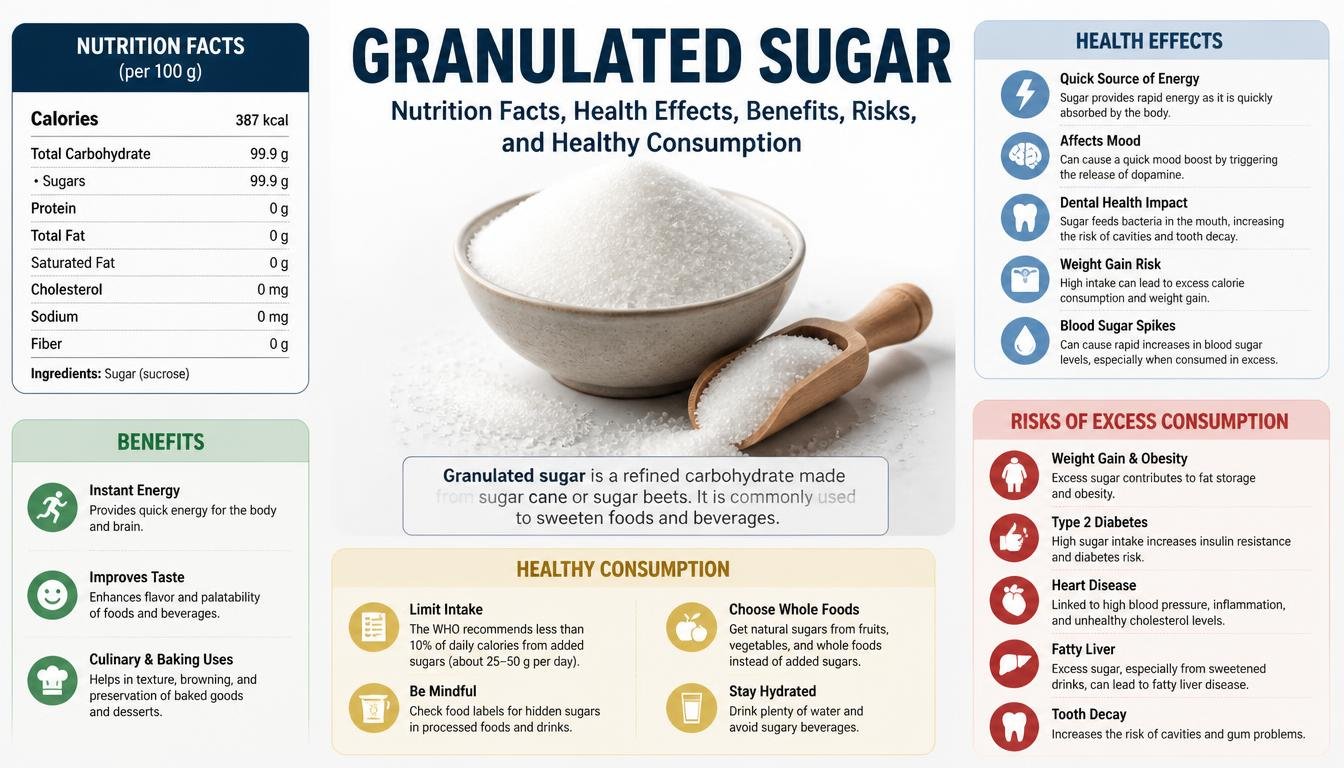
Granulated sugar is one of the most widely used sweeteners in the world and is found in countless homes, restaurants, bakeries, and food manufacturing facilities. Despite its popularity, granulated sugar remains one of the most debated ingredients in nutrition. Understanding the facts behind granulated sugar is essential for making informed dietary choices instead of relying on myths or misinformation. This guide explores everything you need to know about granulated sugar, including its nutritional value, calories, health effects, recommended daily intake, potential benefits, possible risks, and practical ways to consume it responsibly. Whether you are trying to improve your diet, manage your weight, or simply understand how sugar affects your body, this comprehensive article provides evidence-based information to help you make healthier decisions.
What Is Granulated Sugar?
Granulated sugar is a refined carbohydrate that is primarily produced from sugar cane or sugar beets. After harvesting, the plants undergo several stages of processing that remove impurities and separate the naturally occurring sucrose from plant fibers and liquids. The purified sucrose is crystallized, dried, and packaged as the white granulated sugar commonly found in kitchens around the world. Because it contains almost pure sucrose, granulated sugar has a clean, sweet taste and dissolves easily in both hot and cold liquids, making it suitable for cooking, baking, and beverage preparation. Unlike less refined sweeteners, granulated sugar contains virtually no fiber, vitamins, minerals, or antioxidants, meaning its primary nutritional contribution is energy in the form of carbohydrates.
Granulated Sugar Nutrition Facts
Granulated sugar consists almost entirely of carbohydrates in the form of sucrose. One teaspoon contains approximately 16 calories, while one tablespoon contains around 49 calories. A 100-gram serving provides about 387 calories and nearly 100 grams of carbohydrates. It contains no protein, fat, dietary fiber, cholesterol, or sodium. Because nearly all of its calories come from simple carbohydrates, granulated sugar provides quick energy but very little nutritional value. This is why nutrition experts often describe it as a source of “empty calories,” meaning it supplies energy without providing significant amounts of essential nutrients such as vitamins, minerals, or healthy fats.
Health Benefits of Granulated Sugar
Although granulated sugar is frequently criticized, it does have certain benefits when consumed in moderation. The most immediate benefit is its ability to provide a rapid source of energy. Since sucrose is quickly broken down into glucose and fructose, it can help replenish energy stores after physical activity or during periods of intense exercise. Athletes and endurance competitors sometimes consume sugary foods or beverages during prolonged events to maintain energy levels and prevent fatigue. Granulated sugar also improves the taste and texture of many foods, making healthy ingredients such as oatmeal, yogurt, or certain fruits more enjoyable for some individuals. In food preservation, sugar helps inhibit microbial growth by reducing available moisture, which extends the shelf life of products like jams, jellies, and fruit preserves. Additionally, sugar contributes to browning reactions during baking, enhancing flavor, color, and texture in baked goods.
Health Risks of Excessive Sugar Consumption
Regularly consuming large amounts of added sugar can contribute to weight gain because it increases calorie intake without providing lasting fullness. Excess sugar intake may also increase the risk of insulin resistance, which can eventually contribute to the development of type 2 diabetes in susceptible individuals. Dental health is another significant concern, as bacteria in the mouth feed on sugars and produce acids that damage tooth enamel, leading to cavities and tooth decay. High sugar consumption has also been associated with an increased risk of cardiovascular disease when it significantly raises overall calorie intake and contributes to poor dietary patterns. Furthermore, diets rich in sugary foods often displace more nutritious options such as fruits, vegetables, whole grains, and lean proteins, reducing overall diet quality.
How Granulated Sugar Affects the Body
When granulated sugar is consumed, digestive enzymes quickly break sucrose into glucose and fructose. Glucose enters the bloodstream and raises blood sugar levels, prompting the pancreas to release insulin so that cells can absorb glucose for energy or store it for later use. Fructose is primarily processed by the liver, where it may be converted into energy or stored depending on the body’s needs. Consuming large amounts of added sugar over time can lead to repeated spikes in blood glucose and insulin, particularly when combined with an overall diet high in refined carbohydrates. However, eating sugar alongside protein, healthy fats, or fiber-rich foods can slow digestion and reduce rapid changes in blood sugar levels.
Recommended Daily Sugar Intake
Health organizations recommend limiting added sugar consumption rather than eliminating naturally occurring sugars found in fruits and dairy products. Some organizations suggest aiming for even lower levels to support long-term health. Reading food labels, reducing sugary beverages, and choosing minimally processed foods are practical ways to stay within recommended limits without feeling deprived.
Healthy Alternatives to Granulated Sugar
People looking to reduce sugar intake have several alternatives available. Stevia and monk fruit sweeteners provide sweetness with little or no calories, making them popular choices for individuals managing blood sugar or calorie intake. Sugar alcohols like erythritol and xylitol can also reduce overall sugar consumption, though excessive intake may cause digestive discomfort in some individuals. The healthiest approach often involves gradually reducing overall sweetness preferences rather than simply replacing one sweetener with another.
Tips for Reducing Granulated Sugar Consumption
Reducing sugar intake does not require eliminating all sweet foods overnight. Small, sustainable changes are usually more effective over the long term. Choosing water instead of sugary drinks, eating whole fruit instead of candy, preparing homemade meals, checking nutrition labels for added sugars, limiting processed snacks, and using spices such as cinnamon or vanilla to enhance flavor are all practical strategies. Gradually decreasing the amount of sugar added to coffee, tea, cereal, or baked recipes allows the taste buds to adjust naturally over time, making lower-sugar foods more satisfying.
Conclusion
Granulated sugar is an integral part of modern diets and food preparation, but understanding its nutritional profile is essential for maintaining good health. It provides quick energy and enhances the flavor, texture, and preservation of many foods, yet it offers very few essential nutrients. While moderate consumption can fit into a healthy eating pattern, excessive intake of added sugar may increase the risk of obesity, tooth decay, type 2 diabetes, and cardiovascular disease. The key is balance rather than complete avoidance. By practicing portion control, reading food labels, choosing nutrient-dense foods, and limiting added sugars, individuals can enjoy granulated sugar responsibly while supporting their long-term health and wellness goals.
Frequently Asked Questions (FAQ)
1. What is granulated sugar made from?
Granulated sugar is primarily produced from sugar cane or sugar beets and consists almost entirely of sucrose.
2. Is granulated sugar healthy?
Granulated sugar can be part of a balanced diet when consumed in moderation, but excessive intake may increase the risk of several chronic health conditions.
3. How many calories are in granulated sugar?
One teaspoon contains approximately 16 calories, one tablespoon contains about 49 calories, and 100 grams contain roughly 387 calories.
4. Does granulated sugar contain vitamins or minerals?
Granulated sugar contains negligible amounts of vitamins and minerals and is considered a source of empty calories.
5. Can diabetics eat granulated sugar?
People with diabetes may consume small amounts of sugar as part of a healthcare professional’s recommended meal plan, but careful monitoring of total carbohydrate intake is important.
6. What are healthier alternatives to granulated sugar?
Stevia, monk fruit sweetener, erythritol, honey, and pure maple syrup are common alternatives, although natural sweeteners containing sugar should still be consumed in moderation.
7. Is brown sugar healthier than granulated sugar?
Brown sugar contains trace amounts of molasses and a few minerals, but nutritionally it is very similar to granulated sugar.
8. How can I reduce my sugar intake?
Limit sugary beverages, eat more whole foods, check ingredient labels for added sugars, reduce processed snacks, and gradually decrease the amount of sugar added to foods and drinks.

Health
Oral Tirzepatide: Complete Guide to Benefits, Uses, Weight Loss, Side Effects, and Future Availability
Yamaha TW200: Complete Guide, Specifications, Features, Performance, and Buying Advice
Red Angus Cow: Breed Characteristics, Benefits, Care, and Beef Production
Flooding in Auburn WA: Causes, Risks, Safety Tips, and How to Prepare

POCSO Case: Complete Guide to the Protection of Children from Sexual Offences Act, Procedure, Punishment, Rights, and Legal Process

Persona 5 Royal Fusion Calculator: The Ultimate Guide to Perfect Persona Fusion

TPE: 2317 – Complete Guide, Features, Applications, Benefits, and Specifications
 Politics3 months ago
POCSO Case: Complete Guide to the Protection of Children from Sexual Offences Act, Procedure, Punishment, Rights, and Legal Process
- Uncategorized3 months ago
Persona 5 Royal Fusion Calculator: The Ultimate Guide to Perfect Persona Fusion
- Uncategorized3 months ago
TPE: 2317 – Complete Guide, Features, Applications, Benefits, and Specifications
- Business3 months ago
Mietmakler: The Complete Guide to Rental Brokers, Benefits, Costs, and Finding the Perfect Rental Property
- Celebrity3 months ago
Jimmy Harrell: Biography, Career, Achievements, Legacy, and Interesting Facts
- News3 months ago
AC Breaking News: Latest Headlines, Breaking Stories, Live Updates, and Trending News
- Lifestyle3 months ago
Marshall Tools Bricky: The Complete Guide to Professional Bricklaying Tools
- Entertainment3 months ago
Star Wars Movie FX Maker Codes: Complete Guide to Unlock Effects, Characters, and Hidden Features