
Business
Construction Employee Scheduling Software: The Complete Guide to Improving Workforce Management and Project Efficiency

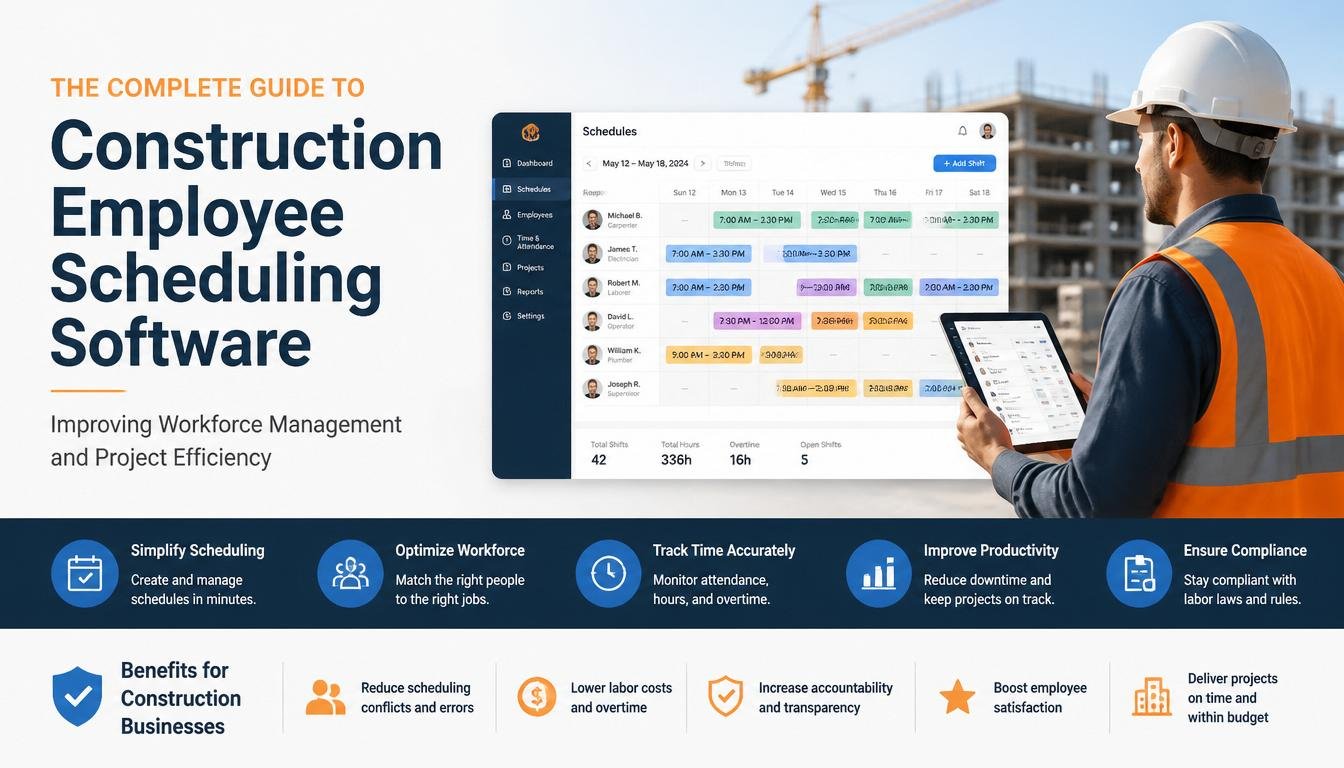
The construction industry is one of the most demanding sectors when it comes to workforce management. Every project requires skilled labor, accurate scheduling, proper communication, and real-time coordination between supervisors, contractors, subcontractors, and field workers. Traditional scheduling methods like spreadsheets, paper rosters, and phone calls often lead to confusion, missed shifts, labor shortages, project delays, and increased operational costs. This is why many construction companies are now investing in construction employee scheduling software to simplify workforce planning and improve productivity.
Construction employee scheduling software allows project managers to create employee schedules, assign shifts, monitor attendance, manage labor costs, communicate instantly with workers, and adjust schedules whenever project requirements change. Whether you’re managing a small residential project or a large commercial construction site, the right scheduling software helps keep everyone on the same page while reducing administrative work.
In this comprehensive guide, you’ll learn everything about construction employee scheduling software, including its features, benefits, how it works, key considerations before purchasing, implementation strategies, and why it has become an essential tool for modern construction businesses.
What is Construction Employee Scheduling Software?
Construction employee scheduling software is a digital workforce management solution designed specifically for construction companies. It helps managers organize employee shifts, assign workers to job sites, monitor attendance, communicate with crews, and track labor hours from one centralized platform.
Unlike generic scheduling tools, construction scheduling software considers project timelines, worker certifications, equipment availability, multiple job sites, overtime regulations, and changing weather conditions. This specialized approach allows construction businesses to optimize workforce allocation while minimizing scheduling conflicts and costly project delays.
Modern construction scheduling platforms often integrate with payroll systems, project management software, GPS tracking, time clocks, and mobile applications, giving managers complete visibility into daily operations.
Why Construction Companies Need Employee Scheduling Software
Managing construction workers involves far more complexity than creating weekly schedules. Workers frequently move between multiple job sites, projects change unexpectedly, subcontractors come and go, and deadlines constantly shift. Without proper scheduling tools, managers spend countless hours making phone calls, updating spreadsheets, and resolving scheduling conflicts that could have been prevented through automation.
Construction employee scheduling software centralizes workforce management by providing real-time visibility into employee availability, certifications, locations, and work assignments. This allows supervisors to quickly adjust schedules, assign qualified workers to urgent tasks, and maintain productivity even when unexpected changes occur. Better scheduling also improves employee satisfaction by providing clear shift notifications, reducing last-minute schedule changes, and ensuring fair workload distribution across teams.
Key Features of Construction Employee Scheduling Software
Smart Employee Scheduling
Advanced scheduling tools enable managers to build weekly or monthly work schedules within minutes. Employees can be assigned based on availability, skill level, certifications, location, and project requirements. Automated scheduling reduces manual work while minimizing conflicts and scheduling errors.
Mobile Access
Construction employees rarely work in offices. Mobile apps allow workers to receive schedules, clock in and out, request time off, swap shifts, and communicate directly with supervisors from anywhere. Managers can also update schedules instantly whenever project conditions change.
Real-Time Notifications
Whenever a schedule changes, workers receive instant notifications through mobile apps, text messages, or email. This eliminates communication delays and reduces confusion about shift assignments.
GPS Time Tracking
Many scheduling systems include GPS-enabled attendance tracking, allowing managers to verify that employees clock in from the correct job site. This reduces time theft and improves payroll accuracy.
Labor Cost Management
The software tracks regular hours, overtime, labor expenses, and project budgets in real time. Managers can quickly identify labor cost overruns before they impact project profitability.
Compliance Management
Construction companies often need to comply with labor regulations, union agreements, safety certifications, and overtime rules. Scheduling software automatically alerts managers when compliance issues arise, reducing legal risks.
Integration with Payroll
Many scheduling platforms integrate directly with payroll systems, eliminating duplicate data entry and reducing payroll processing errors. Accurate attendance records ensure employees receive correct compensation.
Benefits of Using Construction Employee Scheduling Software
Construction employee scheduling software provides significant operational improvements for businesses of every size. One of its biggest advantages is increased productivity because managers spend less time creating schedules manually and more time supervising projects. Automated scheduling minimizes conflicts while ensuring that the right employees are assigned to the right tasks based on qualifications and availability. Employees benefit from better communication, clear schedules, and fewer last-minute changes, resulting in higher morale and improved job satisfaction.
The software also helps reduce labor costs by preventing unnecessary overtime, eliminating duplicate scheduling, and improving workforce utilization. Real-time reporting provides valuable insights into labor expenses, attendance patterns, and project performance, allowing business owners to make informed decisions based on accurate data rather than estimates. Additionally, centralized scheduling improves collaboration between office staff and field teams, creating a more organized and efficient construction operation.
How Construction Employee Scheduling Software Works
Construction scheduling software begins by storing employee information such as availability, certifications, job roles, skills, locations, and preferred working hours. Managers then create projects and assign employees to specific tasks or job sites using drag-and-drop scheduling tools. Once schedules are published, employees receive instant notifications through mobile devices.
Workers can clock in using GPS-enabled mobile applications or biometric attendance systems, allowing managers to monitor attendance in real time. Throughout the project, supervisors can modify schedules whenever delays, weather conditions, equipment shortages, or staffing changes occur. All attendance records automatically synchronize with payroll and reporting systems, providing accurate labor tracking from start to finish.
How to Choose the Best Construction Employee Scheduling Software
When selecting scheduling software, businesses should evaluate ease of use, scalability, mobile functionality, payroll integration, reporting capabilities, GPS tracking, customer support, pricing, security, and customization options. Companies should also consider whether the software supports multiple construction sites, subcontractor management, compliance monitoring, and future business growth.
Choosing software solely based on price may lead to limited functionality, while investing in a comprehensive workforce management solution often produces significant long-term savings through improved efficiency and reduced labor costs.
Common Challenges Without Scheduling Software
Construction businesses relying on manual scheduling often experience communication breakdowns, double-booked employees, missed shifts, inaccurate payroll calculations, excessive overtime, labor shortages, and project delays. Managers frequently spend hours updating spreadsheets and contacting workers individually whenever schedules change. These inefficiencies increase operating costs while reducing overall productivity.
Construction employee scheduling software eliminates many of these problems by automating repetitive administrative tasks and providing real-time visibility into workforce availability.
Future Trends in Construction Employee Scheduling Software
Artificial intelligence is transforming workforce scheduling by automatically generating optimized schedules based on employee availability, historical performance, weather forecasts, and project deadlines. Predictive analytics help managers anticipate labor shortages before they occur, while machine learning continuously improves scheduling recommendations.
Cloud computing enables secure access from anywhere, allowing construction teams to collaborate across multiple job sites in real time. Wearable technology, biometric attendance systems, and Internet of Things (IoT) devices are also becoming integrated into workforce management platforms, providing even greater visibility into labor performance and project progress.
Best Practices for Successful Implementation
Successful implementation begins with defining scheduling objectives and involving supervisors in the software selection process. Employee training is equally important because workers must understand how to access schedules, request leave, and use mobile applications correctly. Construction companies should gradually transition from manual scheduling while integrating payroll, project management, and communication systems for maximum efficiency. Regularly reviewing scheduling reports helps identify improvement opportunities and ensures the software continues delivering measurable business value.
Conclusion
Construction projects depend on efficient workforce coordination, timely communication, and accurate labor management. Manual scheduling methods no longer meet the demands of today’s fast-paced construction environment, where project requirements change rapidly and multiple teams work across various job sites simultaneously. Construction employee scheduling software provides a centralized solution that simplifies workforce planning, improves communication, reduces labor costs, increases productivity, and ensures projects stay on schedule.
By investing in modern scheduling software, construction companies can streamline daily operations, improve employee satisfaction, strengthen project management, and gain a competitive advantage in an increasingly digital construction industry. Whether managing a small contracting business or a large construction enterprise, implementing the right scheduling solution can transform workforce management and contribute significantly to long-term business success.
Frequently Asked Questions (FAQ)
What is construction employee scheduling software?
Construction employee scheduling software is a workforce management solution that helps construction companies create schedules, assign employees to job sites, track attendance, manage labor costs, and improve communication.
Why is employee scheduling important in construction?
Effective scheduling ensures the right workers are available at the right location, reducing project delays, minimizing overtime costs, improving productivity, and enhancing workforce coordination.
Can construction scheduling software reduce labor costs?
Yes. By optimizing employee assignments, preventing unnecessary overtime, improving attendance tracking, and automating workforce planning, construction scheduling software helps reduce labor expenses significantly.
Does construction employee scheduling software include mobile access?
Most modern platforms offer mobile applications that allow employees to view schedules, receive updates, clock in and out, request leave, communicate with managers, and track work hours remotely.
What features should I look for in construction employee scheduling software?
Look for automated scheduling, mobile access, GPS time tracking, payroll integration, attendance management, compliance monitoring, labor cost reporting, real-time notifications, project management integration, and cloud-based accessibility.
Is construction employee scheduling software suitable for small contractors?
Yes. Many scheduling solutions are designed specifically for small and medium-sized contractors, offering affordable pricing, scalable features, and simplified workforce management without requiring extensive IT resources.

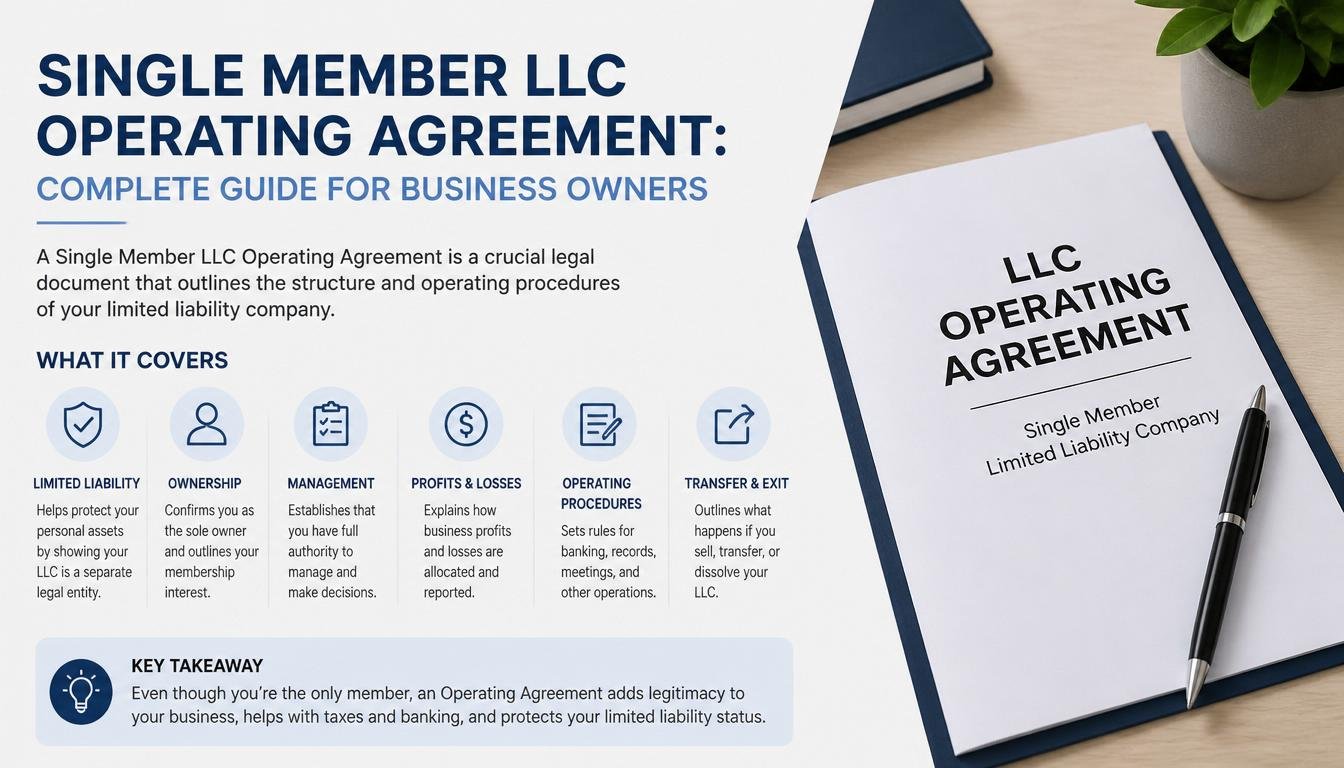
Starting a Limited Liability Company (LLC) is one of the smartest ways to protect your personal assets while running a business. Although many entrepreneurs choose to operate as a single-member LLC because of its simplicity and flexibility, one document is often overlooked—the Single Member LLC Operating Agreement. Many new business owners mistakenly believe that an operating agreement is only necessary for companies with multiple members. In reality, having a well-written operating agreement is beneficial even if you are the only owner of your LLC. It establishes the legal structure of your business, outlines how it will operate, demonstrates that your company is separate from you personally, and can help strengthen your liability protection if legal disputes arise. Banks, investors, and government agencies may also request this document before allowing certain business activities. This comprehensive guide explains everything you need to know about a single member LLC operating agreement, including its purpose, benefits, essential clauses, legal requirements, drafting process, common mistakes, and answers to frequently asked questions.
What Is a Single Member LLC Operating Agreement?
A Single Member LLC Operating Agreement is a legal document that defines how a limited liability company with only one owner will operate. Unlike partnerships or corporations, a single-member LLC has just one individual who owns and manages the business. Even though there are no partners to establish rules with, an operating agreement provides official documentation that separates the business from the owner’s personal affairs. This document outlines ownership, management authority, financial procedures, tax elections, decision-making authority, business records, and procedures for dissolving the company if necessary. Having a detailed operating agreement demonstrates professionalism and provides evidence that the LLC operates as a legitimate legal entity.
Why Is a Single Member LLC Operating Agreement Important?
Many entrepreneurs ask whether they really need an operating agreement when they are the only owner. The answer is yes. While some states do not legally require one, preparing an operating agreement offers significant advantages that protect your business in the long run.
First, it reinforces the legal separation between your personal finances and your company’s assets. This separation is essential for maintaining the limited liability protection that an LLC provides. Second, financial institutions frequently ask for an operating agreement before approving business loans or opening business bank accounts. Third, if legal disputes arise, courts often view a written operating agreement as evidence that the LLC is operating independently from its owner. Finally, if you decide to bring in investors, transfer ownership, or sell the business in the future, the operating agreement serves as a valuable reference document.
Key Components of a Single Member LLC Operating Agreement
An effective operating agreement should include several important sections that clearly define how the business operates.
Business Information
The document should identify the legal name of the LLC, principal business address, formation date, registered agent, and state of organization. This information establishes the identity of the company and confirms its legal existence.
Ownership
This section states that the LLC has only one member and identifies that individual as the sole owner. It may also specify the owner’s initial capital contribution and ownership interest.
Management Structure
The agreement should indicate whether the LLC is managed directly by the owner or by a designated manager. Most single-member LLCs are member-managed, meaning the owner controls daily operations and business decisions.
Capital Contributions
This section explains the money, property, or assets contributed by the owner to establish or operate the business. It also outlines procedures for future contributions if additional funding is required.
Profit and Loss Allocation
Since there is only one owner, all profits and losses generally belong to that individual. The agreement should specify how income will be distributed and how tax obligations will be handled.
Record Keeping
Maintaining organized financial records, tax documents, contracts, and business licenses is essential. The agreement should describe the company’s record-keeping practices and accounting methods.
Dissolution
The operating agreement should include procedures for voluntarily closing the business, paying outstanding debts, distributing remaining assets, and filing any required documents with state authorities.
How to Write a Single Member LLC Operating Agreement
Creating an operating agreement is simpler than many entrepreneurs expect. Begin by identifying the LLC and confirming that you are the sole owner. Next, describe the company’s purpose and business activities. Include provisions for management authority, financial contributions, accounting procedures, tax treatment, and ownership rights. Add sections explaining record retention, amendments, dissolution procedures, and any state-specific legal requirements. Finally, sign and date the agreement and store it with your important business documents.
Although many free templates are available online, customizing the agreement to reflect your business operations is always recommended. Businesses with unique ownership structures or specialized industries may benefit from consulting a business attorney.
Benefits of Having a Written Operating Agreement
A professionally prepared operating agreement provides numerous advantages beyond simple legal compliance. It helps preserve limited liability protection, demonstrates organizational professionalism, simplifies financial transactions, supports tax reporting, facilitates business expansion, and establishes clear operating procedures. Even though the owner makes all business decisions, documenting these procedures reduces confusion and provides valuable evidence if disputes occur with creditors, government agencies, or future business partners.
Common Mistakes to Avoid
Many single-member LLC owners either fail to create an operating agreement or rely on incomplete templates that omit important provisions. Other common mistakes include failing to update the agreement after major business changes, mixing personal and business finances, neglecting state-specific legal requirements, and forgetting to sign or date the document. These errors can weaken liability protection and create unnecessary legal complications.
Single Member LLC Operating Agreement Template Overview
A basic operating agreement generally includes the following sections:
- Company Information
- Sole Member Information
- Business Purpose
- Management Structure
- Capital Contributions
- Profit Distribution
- Tax Classification
- Banking Procedures
- Record Keeping
- Liability Protection
- Amendment Procedures
- Dissolution Process
- Signature Page
These sections provide the framework for a legally organized business document.
Is an Operating Agreement Required by Law?
Requirements vary depending on the state where the LLC is formed. Some states require all LLCs to maintain an operating agreement, while others simply recommend having one. Even in states where the document is optional, creating one remains highly advisable because it supports liability protection, business credibility, and operational consistency.
Tips for Maintaining Your Operating Agreement
An operating agreement should not remain static forever. Review the document regularly, particularly after significant business events such as changing your business address, adding new assets, electing a different tax classification, hiring professional managers, or preparing the business for sale. Keeping the agreement current ensures that it accurately reflects how the company operates.
Conclusion
A Single Member LLC Operating Agreement is one of the most valuable documents a business owner can prepare. While it may seem unnecessary for an LLC with only one owner, it provides essential legal protection, establishes operational procedures, strengthens the separation between personal and business assets, and enhances the company’s credibility with banks, investors, and government agencies. Whether your state requires an operating agreement or not, creating a detailed and customized document is a wise investment that supports the long-term success of your business. By understanding the key components, following best drafting practices, and keeping the agreement updated as your business evolves, you can operate with greater confidence and professionalism.
Frequently Asked Questions (FAQ)
What is a Single Member LLC Operating Agreement?
A Single Member LLC Operating Agreement is a legal document that outlines the ownership, management, financial procedures, and operational rules for an LLC with only one owner.
Is an operating agreement required for a single-member LLC?
The requirement depends on state law. Even when it is not legally required, having an operating agreement is strongly recommended because it helps preserve liability protection and supports business operations.
Can I write my own operating agreement?
Yes. Many business owners prepare their own operating agreements using templates. However, businesses with complex legal or financial circumstances should consider obtaining professional legal advice.
Does an operating agreement need to be notarized?
In most states, notarization is not required. Nevertheless, signing and safely storing the document is considered good business practice.
Can I change my operating agreement later?
Yes. A single-member LLC owner may amend the operating agreement whenever business circumstances change. Updated versions should be signed and dated for accurate record-keeping.
Do banks require an operating agreement?
Many banks request an operating agreement when opening a business checking account or applying for financing because it verifies ownership and management authority.
What happens if I don’t have an operating agreement?
Operating without an agreement can make it more difficult to demonstrate that your LLC is separate from your personal affairs. This may complicate legal disputes, banking relationships, and future business transactions.
Yamaha TW200: Complete Guide, Specifications, Features, Performance, and Buying Advice
Red Angus Cow: Breed Characteristics, Benefits, Care, and Beef Production
Flooding in Auburn WA: Causes, Risks, Safety Tips, and How to Prepare

POCSO Case: Complete Guide to the Protection of Children from Sexual Offences Act, Procedure, Punishment, Rights, and Legal Process

Persona 5 Royal Fusion Calculator: The Ultimate Guide to Perfect Persona Fusion

TPE: 2317 – Complete Guide, Features, Applications, Benefits, and Specifications
 Politics3 months ago
POCSO Case: Complete Guide to the Protection of Children from Sexual Offences Act, Procedure, Punishment, Rights, and Legal Process
- Uncategorized3 months ago
Persona 5 Royal Fusion Calculator: The Ultimate Guide to Perfect Persona Fusion
- Uncategorized3 months ago
TPE: 2317 – Complete Guide, Features, Applications, Benefits, and Specifications
- Business3 months ago
Mietmakler: The Complete Guide to Rental Brokers, Benefits, Costs, and Finding the Perfect Rental Property
- Celebrity3 months ago
Jimmy Harrell: Biography, Career, Achievements, Legacy, and Interesting Facts
- News3 months ago
AC Breaking News: Latest Headlines, Breaking Stories, Live Updates, and Trending News
- Lifestyle3 months ago
Marshall Tools Bricky: The Complete Guide to Professional Bricklaying Tools
- Entertainment3 months ago
Star Wars Movie FX Maker Codes: Complete Guide to Unlock Effects, Characters, and Hidden Features