Connect with us

Lifestyle

How to Wash Pillows in the Washing Machine: The Complete Step-by-Step Guide

Published

on

how to wash pillows in the washing machine

Knowing how to wash pillows in the washing machine is essential for maintaining a clean, healthy, and comfortable sleeping environment. Many people regularly wash their sheets and pillowcases but forget that pillows themselves collect sweat, body oils, dust mites, dead skin cells, allergens, and bacteria over time. Even if your pillow looks clean from the outside, the inside filling may contain contaminants that can affect sleep quality and trigger allergies.

Fortunately, most pillows can be safely cleaned in a washing machine when the correct method is used. Washing pillows properly not only removes dirt and odors but also restores their softness, fluffiness, and overall lifespan. However, using the wrong detergent, water temperature, or drying technique can damage the pillow filling and reduce its comfort.

This complete guide explains everything you need to know about how to wash pillows in the washing machine, including which pillows are machine washable, how often they should be cleaned, the best washing settings, drying techniques, and common mistakes to avoid. By following these steps, you can enjoy fresh, hygienic pillows that support a healthier night’s sleep.

Why Washing Your Pillows Is Important

Pillows absorb much more than most people realize. Every night they collect perspiration, natural body oils, hair products, saliva, dust, pollen, pet dander, and microscopic dust mites. Over time these contaminants build up deep inside the pillow where a pillowcase cannot protect against them.

Regular pillow washing improves sleep hygiene by removing allergens and bacteria that may contribute to skin irritation, unpleasant odors, asthma symptoms, and allergies. Clean pillows also maintain their loft better, providing proper neck and head support.

Experts generally recommend washing washable pillows every three to six months, depending on your sleeping habits, allergies, and whether pets sleep on the bed.

Can You Wash Pillows in the Washing Machine?

One of the most common questions homeowners ask is whether pillows can safely go into a washing machine. The answer depends on the pillow material.

Machine Washable Pillows

  • Polyester pillows
  • Cotton pillows
  • Feather pillows
  • Down pillows
  • Fiberfill pillows

These pillows usually wash well when the care label instructions are followed carefully.

Pillows That Should Not Be Machine Washed

Certain pillow materials can become damaged during washing.

These include:

  • Memory foam pillows
  • Latex pillows
  • Buckwheat pillows
  • Gel foam pillows

Instead, these pillows should be spot-cleaned or hand-cleaned according to the manufacturer’s instructions.

Always check the care label before washing.

What You Need Before Washing Pillows

Preparing your pillows before washing helps prevent damage and improves cleaning performance.

Gather the following:

  • Mild liquid laundry detergent
  • Washing machine
  • Dryer or drying rack
  • Tennis balls or wool dryer balls
  • Clean towels
  • Stain remover (optional)

Avoid bleach unless the pillow manufacturer specifically recommends it.

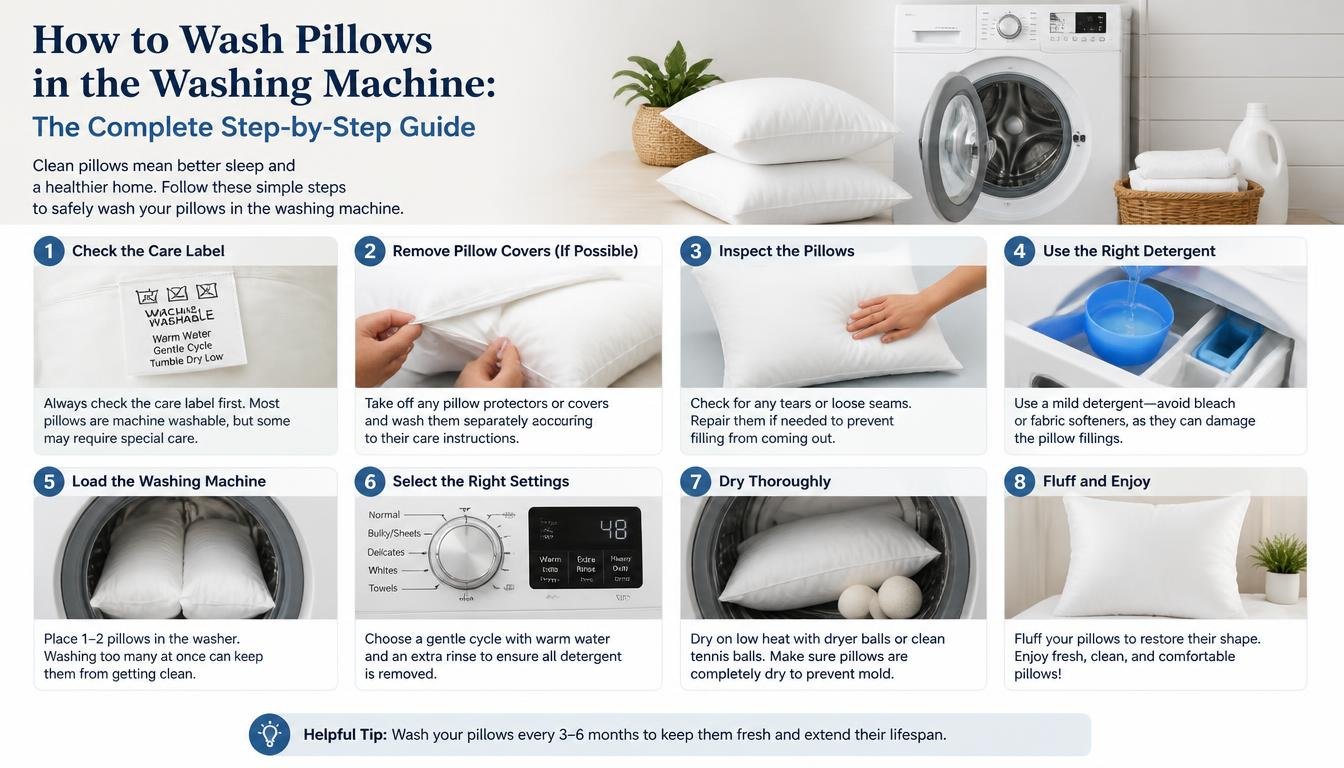
Step 1: Check the Care Label

The care label provides important information regarding water temperature, washing method, drying temperature, and bleach usage.

Ignoring these instructions may permanently damage the pillow filling.

If the label says “Machine Wash,” you’re ready to proceed.

Step 2: Remove Pillow Protectors and Pillowcases

Take off all pillowcases and protective covers before washing.

Wash pillowcases separately with your regular laundry.

Inspect the pillow carefully for tears or loose stitching. Repair any damage before placing it into the washer to prevent the filling from escaping.

Step 3: Load Two Pillows at Once

One of the best washing machine tips is to wash two pillows together whenever possible.

This balances the washing machine drum, reduces vibration, and allows the pillows to move evenly during the wash cycle.

If you only have one pillow, add several towels to help balance the load.

Step 4: Choose the Right Washing Machine Settings

Selecting the correct settings is one of the most important parts of how to wash pillows in the washing machine.

Recommended settings include:

  • Warm water
  • Gentle cycle
  • Extra rinse cycle
  • Low spin speed

Warm water removes oils and dirt effectively without damaging most pillow fillings.

The extra rinse removes detergent residue that can leave pillows stiff.

Step 5: Use the Right Amount of Detergent

Many people mistakenly use too much detergent.

Only a small amount of mild liquid detergent is necessary because pillows absorb soap easily.

Excess detergent can remain trapped inside the filling and make pillows feel heavy or sticky.

Avoid powdered detergents because they may leave residue.

Step 6: Wash the Pillows

Place the pillows into the washing machine.

Add detergent.

Start the gentle wash cycle.

Allow the complete cycle to finish, including the extra rinse.

If your washing machine has a bulky bedding setting, this is often an excellent choice.

Step 7: Dry the Pillows Properly

Drying is just as important as washing.

Improper drying may cause mildew, mold, unpleasant odors, or clumping inside the pillow.

Place the pillows in the dryer using:

  • Low heat
  • Air fluff setting
  • Wool dryer balls or clean tennis balls

The balls continuously fluff the pillows while breaking apart clumps.

Stop the dryer every 30 minutes and fluff the pillows by hand.

Continue drying until no moisture remains inside.

How to Keep Pillows Fluffy After Washing

Freshly washed pillows sometimes become flat if they are not dried correctly.

To restore fluffiness:

  • Shake pillows several times.
  • Massage the filling evenly.
  • Use dryer balls.
  • Avoid overheating.
  • Allow pillows to cool completely before using them.

These steps help restore the pillow’s original shape.

How Often Should You Wash Pillows?

A good cleaning schedule keeps pillows hygienic and extends their lifespan.

General recommendations:

  • Every 3–6 months for most households.
  • Every 2–3 months for allergy sufferers.
  • Immediately after illness.
  • More often if pets sleep on the bed.

Replacing pillows every one to two years is also recommended if they no longer provide adequate support.

Common Mistakes to Avoid

Many pillows become damaged because of simple mistakes.

Avoid the following:

  • Using too much detergent.
  • Washing memory foam pillows in the machine.
  • Skipping the extra rinse cycle.
  • Drying on high heat.
  • Storing pillows while damp.
  • Washing damaged pillows without repairing them first.

Avoiding these mistakes helps your pillows remain soft and durable.

Extra Tips for Cleaner Pillows

Using pillow protectors significantly reduces dirt buildup and extends the time between washes. Airing pillows outside on a dry day helps remove odors and moisture naturally. Vacuuming pillows occasionally can reduce dust accumulation, especially for allergy sufferers. Rotating pillows regularly also promotes even wear and helps them maintain their shape over time. Combining these habits with regular machine washing keeps your pillows fresh, comfortable, and supportive for years.

Conclusion

Learning how to wash pillows in the washing machine is one of the easiest ways to improve bedroom hygiene and extend the life of your bedding. Clean pillows provide better support, smell fresher, reduce allergens, and create a healthier sleeping environment. By checking the care label, using a gentle wash cycle, selecting the right detergent, and thoroughly drying the pillows, you can safely clean most polyester, cotton, feather, and down pillows at home without damaging them. Establishing a routine of washing your pillows every three to six months, along with using protective covers and proper maintenance, ensures they remain soft, fluffy, and comfortable for restful sleep. Following the simple techniques outlined in this guide will help you enjoy cleaner pillows and a healthier bedroom all year long.

Frequently Asked Questions (FAQs)

1. Can all pillows be washed in the washing machine?

No. Polyester, cotton, feather, down, and fiberfill pillows are usually machine washable, while memory foam, latex, buckwheat, and many gel pillows should not be machine washed unless the manufacturer specifically allows it.

2. How often should I wash my pillows?

Most pillows should be washed every three to six months. If you have allergies, sweat heavily, or share your bed with pets, washing them every two to three months is recommended.

3. What detergent is best for washing pillows?

A mild liquid laundry detergent is the best choice because it rinses out more easily than powdered detergent and is less likely to leave residue inside the pillow.

4. Can I use bleach to wash pillows?

Bleach is generally not recommended unless the care label specifically states that it is safe. Bleach can weaken fabrics and damage certain pillow fillings.

5. Why should I wash two pillows together?

Washing two pillows at the same time helps balance the washing machine drum, reducing vibration and allowing both pillows to clean more evenly.

6. How do I dry pillows without making them lumpy?

Dry pillows on low heat or an air-fluff setting with wool dryer balls or clean tennis balls. Pause the dryer occasionally to fluff the pillows by hand until they are completely dry.

7. How can I tell if my pillow is completely dry?

Squeeze the pillow and feel the center carefully. If there is any coolness or dampness inside, continue drying. Even slight moisture can lead to mildew or unpleasant odors.

8. How long do pillows usually last?

Most synthetic pillows last about one to two years, while high-quality down or feather pillows can last five years or more with proper care. Replace pillows when they lose their shape, become lumpy, or no longer provide adequate support.

9. Can I wash pillows with other laundry?

It is best to wash pillows separately or with another pillow of similar size. Mixing them with heavy items like jeans or towels can reduce cleaning effectiveness and place extra strain on the washing machine.

10. What is the best way to keep pillows clean between washes?

Use zippered pillow protectors, wash pillowcases weekly, air out your pillows regularly, and spot-clean stains as soon as they occur. These simple habits reduce dirt buildup and help extend the life of your pillows.

Continue Reading

Lifestyle

House Beautiful Competitions: How to Enter, Win, and Make the Most of Every Opportunity

Published

on

house beautiful competitions

House Beautiful competitions have become increasingly popular among homeowners, renters, interior design enthusiasts, and people looking for exciting opportunities to win incredible prizes. From beautifully designed homes and luxury furniture to cash prizes, home makeovers, and exclusive lifestyle rewards, these competitions attract thousands of participants every year. The appeal lies in the possibility of transforming your living space or even becoming the owner of a dream home with just a small entry fee or, in some cases, a free entry option.

Whether you are new to House Beautiful competitions or have been entering prize draws for years, understanding how these competitions work can significantly improve your experience. Many people enter without reading the terms and conditions, missing bonus entry opportunities or misunderstanding eligibility requirements. Learning the rules, entry methods, judging process, and strategies can help you avoid common mistakes and maximize your chances.

In this complete guide, you will discover everything you need to know about House Beautiful competitions, including how they work, the types of prizes available, tips for entering successfully, common myths, legal considerations, and frequently asked questions. If you are looking for reliable information before entering your next competition, this guide will provide all the details you need.

What Are House Beautiful Competitions?

House Beautiful competitions are promotional contests that give participants the opportunity to win valuable prizes related to homes, interiors, lifestyle, and luxury living. Depending on the organizer, prizes may include fully furnished homes, interior design packages, luxury holidays, high-end appliances, furniture collections, shopping vouchers, garden makeovers, or substantial cash rewards. These competitions are designed to inspire people interested in home improvement while offering exciting opportunities to win life-changing prizes.

Many competitions require participants to purchase an entry ticket or answer a skill-based question, while others offer a free postal entry route where required by law. Each competition operates under official terms and conditions that outline eligibility requirements, deadlines, prize details, and winner selection procedures. Reading these conditions carefully is essential before participating.

Why Are House Beautiful Competitions So Popular?

The popularity of House Beautiful competitions continues to grow because they combine entertainment with the possibility of winning extraordinary prizes. Instead of spending years saving for a dream home or expensive renovations, entrants enjoy the excitement of potentially winning them through a competition. Social media, digital marketing, and influencer partnerships have also increased awareness, encouraging more people to participate.

Another reason for their popularity is accessibility. Most competitions have straightforward entry methods, making participation simple for first-time entrants. Attractive prize packages featuring professionally designed homes, luxury kitchens, landscaped gardens, and premium furnishings further increase their appeal.

Types of Prizes Offered in House Beautiful Competitions

House Beautiful competitions feature a wide range of prizes designed to appeal to different lifestyles and interests. Some of the most common rewards include fully furnished dream homes located in desirable areas, luxury apartments, home renovation packages, complete kitchen remodels, garden landscaping services, designer furniture, smart home technology, premium household appliances, shopping vouchers, cash prizes, and luxury travel experiences.

Prize packages often include additional benefits such as legal fees, insurance, furniture, and maintenance allowances, making them even more valuable for winners.

How to Enter House Beautiful Competitions

Entering House Beautiful competitions is generally a simple process, but following the correct steps can help ensure your entry is valid. Participants usually begin by visiting the official competition website, where they review the available competitions and prize details. After reading the eligibility requirements and competition rules, entrants complete the registration form with accurate personal information. Some competitions require payment for an entry ticket, while others provide free entry methods. Once the entry has been submitted successfully, participants receive confirmation and wait for the winner announcement according to the published schedule.

Before entering multiple competitions, it is wise to establish a budget and keep track of closing dates to avoid missing important deadlines.

Tips to Improve Your Chances of Winning

Although competitions rely largely on chance or predetermined judging criteria, participants can improve their overall experience by entering before deadlines, carefully following entry instructions, taking advantage of bonus entries where available, ensuring personal information is accurate, and participating consistently over time. Reading the competition rules thoroughly can prevent accidental disqualification caused by incomplete or incorrect submissions.

Maintaining realistic expectations is equally important. While many people dream of winning major prizes, competition participation should remain enjoyable and financially responsible.

Are House Beautiful Competitions Legitimate?

Many House Beautiful competitions operate legally and transparently, but it is important to verify the legitimacy of any competition before entering. Reputable organizers clearly publish their terms and conditions, explain how winners are selected, display previous winners where appropriate, provide customer support, and comply with applicable promotional laws. Participants should avoid competitions that make unrealistic promises, hide important information, or request unnecessary personal or financial details.

Researching reviews and checking the organizer’s reputation can provide additional confidence before purchasing entries.

Common Mistakes Participants Should Avoid

One of the most common mistakes is failing to read the competition rules completely. Some entrants accidentally miss eligibility requirements, submit incomplete forms, or overlook important deadlines. Others forget to check email notifications or phone calls after entering, causing them to miss winner verification requests.

Another mistake is spending more money than originally planned in pursuit of additional entries. Setting a sensible budget helps ensure competitions remain enjoyable without creating financial pressure.

Benefits of Entering House Beautiful Competitions

House Beautiful competitions provide more than the possibility of winning valuable prizes. They introduce participants to inspiring home designs, innovative decorating ideas, and modern interior trends. Many entrants enjoy browsing beautifully presented properties while imagining new possibilities for their own homes. Even those who do not win often discover useful decorating inspiration, home improvement products, and creative design concepts that influence future renovation projects.

The excitement of participating and anticipating winner announcements also creates an engaging experience that many people enjoy as part of their lifestyle interests.

Final Thoughts

House Beautiful competitions continue to attract thousands of participants because they combine the excitement of prize draws with the dream of owning beautiful homes, luxury furnishings, and valuable lifestyle rewards. Whether you are hoping to win a fully furnished property, receive a home makeover, or simply enjoy the thrill of entering, understanding how these competitions operate will help you participate with greater confidence. Always read the official rules, verify the organizer’s credibility, and enter responsibly within your budget. With realistic expectations and careful participation, House Beautiful competitions can be an enjoyable and rewarding experience.

Frequently Asked Questions (FAQ)

What are House Beautiful competitions?

House Beautiful competitions are promotional contests that offer participants the opportunity to win homes, furniture, cash, home makeovers, luxury holidays, and other lifestyle prizes.

Are House Beautiful competitions free to enter?

Some competitions offer free entry methods, while others require participants to purchase an entry ticket. Always read the official terms and conditions before entering.

Are House Beautiful competitions legitimate?

Many are legitimate when operated by reputable organizations that publish transparent rules, winner information, and official terms. Always research the organizer before participating.

Can anyone enter House Beautiful competitions?

Eligibility depends on the specific competition. Most have age, residency, and legal requirements that participants must meet before entering.

How are winners selected?

The winner selection process varies. Some competitions use random draws, while others involve skill-based questions or judging panels, depending on applicable laws and competition rules.

What should I check before entering?

Review the eligibility requirements, entry deadline, prize details, terms and conditions, winner selection process, privacy policy, and any free entry options if available.

How can I improve my chances of winning?

Follow all entry instructions carefully, submit valid entries before deadlines, keep your contact details up to date, and participate responsibly without exceeding your budget.

Are prizes taxable?

Tax treatment depends on your country or jurisdiction. Winners should check local tax regulations or consult a qualified tax professional if necessary.

Can I enter multiple House Beautiful competitions?

Yes, provided you meet the eligibility requirements and follow the rules for each individual competition.

Is entering House Beautiful competitions worth it?

For people who enjoy prize competitions and understand that winning is never guaranteed, they can provide entertainment and the possibility of winning valuable home and lifestyle prizes.

Continue Reading

Lifestyle

Kitchen Islands Island: The Complete Guide to Design, Storage, Styles, and Smart Kitchen Planning

Published

on

kitchen islands island

The kitchen has become much more than a place to prepare meals. It serves as the heart of the home where families gather, friends socialize, and everyday life unfolds. One of the most valuable additions to any kitchen is a well-designed kitchen island. Whether you are building a new home or renovating an existing kitchen, understanding the importance of a kitchen island can help you maximize both beauty and functionality. Many homeowners search for kitchen islands island ideas because they want inspiration for creating a central workspace that combines storage, seating, organization, and elegant design into one feature. A thoughtfully planned kitchen island improves workflow, enhances the overall appearance of the room, and adds significant value to your property. From compact islands designed for apartments to expansive custom islands with built-in appliances and seating for the whole family, there are countless possibilities to match every lifestyle and budget. This comprehensive guide explores everything you need to know about kitchen islands, including styles, materials, dimensions, storage solutions, seating options, costs, maintenance, and the latest design trends to help you make an informed decision.

What Is a Kitchen Island?

A kitchen island is a freestanding cabinet or countertop unit placed in the center of a kitchen to provide additional workspace, storage, and functionality. Unlike traditional countertops that are attached to walls, a kitchen island is accessible from all sides, making it a versatile feature for food preparation, cooking, serving meals, entertaining guests, and even working from home. Modern kitchen islands often include sinks, dishwashers, cooktops, wine coolers, electrical outlets, charging stations, and generous seating areas. Because they combine practical features with attractive design, kitchen islands have become one of the most sought-after elements in contemporary kitchen remodeling projects. Homeowners appreciate the flexibility they offer, allowing the kitchen to function more efficiently while creating a welcoming centerpiece for family gatherings and social events.

Benefits of Installing a Kitchen Island

A kitchen island provides numerous advantages that extend far beyond aesthetics. One of its greatest benefits is the additional countertop space, which makes meal preparation more comfortable and organized. Instead of working in a cramped area, homeowners gain a spacious surface for chopping vegetables, baking, preparing multiple dishes, or serving food during parties. Storage is another major advantage, as kitchen islands can include cabinets, drawers, open shelving, pull-out organizers, spice racks, trash bins, and appliance garages that help reduce clutter throughout the kitchen. Many islands also feature seating, allowing family members to enjoy breakfast, children to complete homework, or guests to socialize while meals are prepared. In addition to improving daily convenience, a stylish kitchen island often increases the overall value of a home, making it an attractive investment for homeowners considering future resale opportunities.

Popular Types of Kitchen Islands

Kitchen islands come in many styles to accommodate different kitchen layouts and personal preferences. Fixed kitchen islands are permanently installed and provide the highest level of customization, allowing homeowners to include sinks, cooktops, storage cabinets, and electrical outlets. Portable kitchen islands are ideal for smaller kitchens because they can be moved when additional floor space is needed. Rolling kitchen carts offer excellent flexibility and are particularly useful for apartments or rental properties where permanent renovations are not practical. Double islands have become increasingly popular in luxury kitchens, providing separate workstations for food preparation and entertaining. Waterfall islands feature countertops that extend vertically down both sides, creating a sleek and modern appearance. Multi-level islands include different countertop heights that separate cooking areas from dining spaces while adding visual interest to the overall kitchen design.

Choosing the Right Size

Selecting the correct kitchen island size requires careful planning to ensure comfortable movement throughout the kitchen. Designers generally recommend maintaining at least 36 to 48 inches of clearance around all sides of the island to allow cabinet doors and appliances to open easily while providing sufficient walking space. Small kitchens may benefit from compact islands measuring approximately four feet in length, whereas larger kitchens can accommodate islands exceeding eight feet with seating for multiple people. The ideal dimensions depend on the available floor space, the intended functions of the island, and the overall kitchen layout. Proper planning ensures that the island enhances workflow rather than creating unnecessary congestion.

Best Materials for Kitchen Islands

The countertop material significantly influences both the appearance and durability of a kitchen island. Quartz remains one of the most popular choices because it resists stains, scratches, and bacteria while requiring minimal maintenance. Granite offers natural beauty with unique patterns that make every countertop distinctive. Marble delivers timeless luxury but requires regular sealing to prevent staining. Butcher block countertops create warmth and are especially appreciated by home chefs who enjoy food preparation directly on wood surfaces. Concrete countertops provide an industrial aesthetic and exceptional customization possibilities, while stainless steel surfaces are widely used in professional kitchens due to their durability, heat resistance, and hygienic qualities. Choosing the appropriate material depends on your budget, cooking habits, maintenance preferences, and desired design style.

Kitchen Island Storage Ideas

Storage is one of the primary reasons homeowners invest in kitchen islands. Deep drawers provide convenient access to pots, pans, and small appliances, while vertical dividers keep baking sheets and cutting boards neatly organized. Pull-out spice racks maximize narrow spaces and make cooking ingredients easy to access. Built-in wine racks add sophistication while efficiently storing bottles. Open shelves offer an excellent place to display cookbooks, decorative baskets, or stylish kitchen accessories. Hidden trash and recycling compartments improve cleanliness by keeping waste containers out of sight. Specialized storage solutions such as charging drawers, microwave compartments, pet feeding stations, and appliance garages further enhance the functionality of a modern kitchen island.

Kitchen Island Seating

One of the most attractive features of a kitchen island is its ability to create a comfortable gathering space. Seating transforms the kitchen into a social hub where family members can enjoy casual meals, children can complete schoolwork, and guests can interact with the cook. Most designers recommend allowing approximately 24 inches of seating width per person to ensure comfort. Counter-height stools pair well with standard islands, while bar-height seating creates a more elevated dining experience. Upholstered stools add comfort for extended sitting, whereas backless stools can be tucked neatly beneath the countertop to conserve space. The choice of seating should complement both the kitchen’s design style and the family’s daily routines.

Kitchen Island Design Trends

Modern kitchen islands continue to evolve with changing homeowner preferences and technological advancements. Waterfall countertops remain highly desirable for their clean, contemporary appearance. Bold cabinet colors such as navy blue, forest green, and matte black create striking focal points within neutral kitchens. Integrated smart technology, including wireless charging stations, USB outlets, touch-activated faucets, and hidden power outlets, enhances convenience. Sustainable materials, energy-efficient lighting, and eco-friendly cabinetry appeal to environmentally conscious homeowners. Mixed-material designs that combine wood, stone, and metal add texture and visual depth while reflecting current interior design trends.

Kitchen Island Maintenance

Maintaining a kitchen island ensures long-lasting beauty and performance. Daily cleaning with mild soap and warm water removes food residue and prevents staining. Different countertop materials require specific care routines, such as periodic sealing for natural stone or regular oiling for butcher block surfaces. Promptly wiping spills, using cutting boards, and avoiding excessive heat exposure help preserve the finish. Routine inspection of cabinet hardware, plumbing fixtures, and electrical outlets ensures that the island continues functioning efficiently for many years.

Conclusion

A thoughtfully designed kitchen island represents one of the most valuable improvements homeowners can make to their kitchens. Beyond providing additional workspace, storage, and seating, it creates a welcoming focal point that supports cooking, entertaining, family gatherings, and everyday living. Whether you choose a compact portable island for a small apartment or a luxurious custom island with premium materials and integrated appliances, the right design can dramatically improve both functionality and aesthetics. By carefully considering size, layout, materials, storage options, and seating arrangements, you can create a kitchen island that perfectly complements your lifestyle while increasing your home’s comfort, efficiency, and long-term value.

Frequently Asked Questions (FAQs)

1. What is the ideal size for a kitchen island?

The ideal size depends on your kitchen layout, but most islands are between 4 and 8 feet long with at least 36–48 inches of clearance around all sides.

2. Is a kitchen island suitable for small kitchens?

Yes. Compact and portable kitchen islands are excellent options for smaller kitchens, providing extra workspace and storage without overwhelming the room.

3. Which countertop material is best for a kitchen island?

Quartz is one of the best choices because it is durable, low-maintenance, stain-resistant, and available in many colors and patterns.

4. How many seats can a kitchen island accommodate?

Most kitchen islands comfortably seat two to six people, depending on their length and available overhang.

5. Does a kitchen island increase home value?

Yes. A well-designed kitchen island is a desirable feature that can improve functionality, enhance visual appeal, and contribute positively to a home’s resale value.

6. Can a kitchen island include appliances?

Absolutely. Many modern kitchen islands incorporate sinks, dishwashers, cooktops, microwaves, wine coolers, refrigerators, and electrical outlets.

7. What is the minimum clearance around a kitchen island?

Design experts generally recommend maintaining at least 36 inches of clearance, while 42–48 inches provides a more comfortable workflow in busy kitchens.

8. Are portable kitchen islands worth buying?

Yes. Portable kitchen islands offer flexibility, affordability, additional storage, and extra workspace, making them an excellent solution for renters and homeowners with limited space.

Continue Reading

Lifestyle

Farmhouse Fresh: The Complete Guide to Natural Living, Fresh Ingredients, and Farm-Inspired Beauty

Published

on

farmhouse fresh

The concept of farmhouse fresh has become increasingly popular among people looking for healthier lifestyles, cleaner beauty products, and environmentally friendly choices. Whether referring to skincare made with botanical ingredients, fresh farm-inspired home décor, or natural living practices, farmhouse fresh represents purity, sustainability, and quality. Consumers today are more aware of what they use on their skin and in their homes, making products inspired by farms and natural ingredients more desirable than ever before. The farmhouse fresh philosophy emphasizes freshness, wholesome ingredients, ethical production, and respect for nature, making it a favorite choice for individuals seeking authenticity and wellness in everyday life.

Choosing farmhouse fresh products means embracing a lifestyle that values natural ingredients, eco-friendly manufacturing, and long-term health. From luxurious botanical skincare to organic body care and environmentally responsible packaging, farmhouse fresh continues to redefine modern beauty and wellness by combining traditional farming values with innovative product development.

What Does Farmhouse Fresh Mean?

Farmhouse fresh represents products and lifestyles inspired by farms, fresh harvests, and natural ingredients. The term often describes skincare, food, home décor, and wellness products that prioritize freshness, purity, and sustainability. Instead of relying heavily on artificial chemicals, farmhouse fresh products typically incorporate botanical extracts, fruits, vegetables, herbs, and plant-based oils that nourish the body while reducing environmental impact.

The popularity of farmhouse fresh living reflects a growing desire to reconnect with nature in a world increasingly dominated by synthetic ingredients and processed goods. People appreciate products that feel authentic, smell naturally pleasant, and deliver effective results without unnecessary additives. This approach encourages healthier habits while supporting sustainable farming and environmentally conscious production methods.

Why Farmhouse Fresh Products Are So Popular

The demand for farmhouse fresh products has increased significantly because consumers are becoming more informed about ingredient quality and environmental responsibility. Modern shoppers carefully read labels, compare ingredient lists, and seek brands that align with their values. Farm-inspired products often emphasize transparency, allowing buyers to understand exactly what they are putting on their skin or bringing into their homes.

Another reason for their popularity is the sensory experience they provide. Natural botanical ingredients create refreshing fragrances, rich textures, and nourishing formulas that enhance daily routines. Whether using a botanical moisturizer, herbal cleanser, or fruit-infused body lotion, consumers enjoy products that feel luxurious while remaining gentle on the skin. This balance between effectiveness and natural care continues to attract people of all ages.

Farmhouse Fresh Skincare and Its Natural Ingredients

Farmhouse fresh skincare focuses on using plant-derived ingredients that support healthy skin without excessive synthetic chemicals. Common ingredients include aloe vera, cucumber, chamomile, lavender, honey, oatmeal, pumpkin, green tea, coconut oil, sunflower oil, shea butter, and botanical extracts. Each ingredient contributes unique benefits, including hydration, soothing irritation, reducing redness, improving skin texture, and protecting against environmental stress.

Many farmhouse fresh skincare products also incorporate vitamins and antioxidants obtained from fruits and vegetables. These nutrients help maintain youthful-looking skin by supporting collagen production and reducing the appearance of fine lines. Regular use of natural skincare products may improve skin balance while minimizing exposure to harsh chemicals commonly found in conventional cosmetics.

Benefits of Choosing Farmhouse Fresh Products

One of the greatest advantages of farmhouse fresh products is their focus on high-quality ingredients sourced from nature. Many consumers experience healthier skin because botanical extracts often provide vitamins, minerals, and antioxidants that nourish the skin naturally. The reduced use of harsh chemicals makes these products suitable for individuals with sensitive or easily irritated skin.

Farmhouse fresh products also support environmental sustainability. Many brands prioritize recyclable packaging, ethical ingredient sourcing, responsible farming, and cruelty-free manufacturing practices. These efforts reduce environmental impact while encouraging consumers to make more conscious purchasing decisions. Choosing natural products benefits not only personal health but also contributes to a healthier planet.

Farmhouse Fresh Lifestyle Beyond Skincare

Farmhouse fresh living extends far beyond beauty products. It includes decorating homes with natural materials, preparing meals using fresh seasonal produce, growing herbs and vegetables, reducing waste, and embracing sustainable habits. Wooden furniture, woven baskets, fresh flowers, handmade crafts, and neutral colors all contribute to the farmhouse-inspired aesthetic that has become popular worldwide.

Living a farmhouse fresh lifestyle also involves simplifying everyday routines and focusing on quality rather than quantity. Many people find that incorporating natural elements into their homes creates a calming environment while encouraging healthier daily habits. This lifestyle celebrates authenticity, craftsmanship, and meaningful connections with nature.

How to Build a Farmhouse Fresh Skincare Routine

Creating a farmhouse fresh skincare routine begins with selecting products containing natural botanical ingredients appropriate for your skin type. Start with a gentle cleanser that removes impurities without stripping away natural oils. Follow with a toner containing soothing herbal extracts to refresh and balance the skin. Apply a serum rich in antioxidants to protect against environmental damage, and finish with a nourishing moisturizer that locks in hydration throughout the day.

Weekly exfoliation using natural fruit enzymes or finely milled botanical ingredients helps remove dead skin cells while maintaining a smooth complexion. Adding hydrating face masks made with honey, oats, pumpkin, or cucumber can further improve skin softness and radiance. Consistency is essential, as natural skincare typically delivers gradual, long-lasting improvements with regular use.

Sustainability and Eco-Friendly Practices

Sustainability is a cornerstone of the farmhouse fresh philosophy. Many companies committed to this approach invest in responsible farming methods, renewable resources, biodegradable packaging, and ethical sourcing. These practices help reduce waste, conserve natural resources, and support farming communities that prioritize environmental stewardship.

Consumers increasingly appreciate brands that are transparent about their manufacturing processes and environmental commitments. Supporting businesses that value sustainability encourages positive industry changes while allowing individuals to make purchases aligned with their personal values.

Tips for Choosing the Best Farmhouse Fresh Products

When shopping for farmhouse fresh products, always review ingredient lists carefully and prioritize items containing recognizable botanical ingredients. Look for products that avoid unnecessary artificial fragrances, parabens, sulfates, and harsh preservatives whenever possible. Reading customer reviews, researching ingredient sources, and selecting reputable manufacturers can help ensure quality and effectiveness.

It is also important to consider your individual skin type and personal preferences. While natural ingredients benefit many people, choosing products specifically formulated for dry, oily, combination, or sensitive skin can maximize results. Testing new products gradually allows you to determine compatibility before incorporating them into your complete skincare routine.

Why Farmhouse Fresh Continues to Grow in Popularity

The continued growth of farmhouse fresh reflects broader consumer interest in wellness, sustainability, and authenticity. As awareness increases regarding ingredient safety and environmental responsibility, people increasingly seek products that align with healthier lifestyles. Farmhouse fresh products successfully combine natural ingredients, effective formulations, and environmentally conscious practices, making them an appealing choice for modern consumers.

This movement also resonates emotionally because it reminds people of simpler times, fresh harvests, and a stronger connection to nature. Whether through skincare, home décor, or everyday living, farmhouse fresh offers an approachable way to embrace healthier habits while supporting responsible production methods.

Conclusion

Farmhouse fresh is more than a trend—it represents a thoughtful approach to beauty, wellness, and everyday living rooted in nature and sustainability. By choosing products made with botanical ingredients and supporting environmentally responsible practices, consumers can enjoy healthier skin, reduce their ecological footprint, and create a lifestyle centered on freshness and authenticity. Whether you are beginning your journey into natural skincare or embracing a complete farmhouse-inspired lifestyle, farmhouse fresh provides a practical and rewarding path toward healthier living, greater environmental awareness, and lasting well-being.

Frequently Asked Questions (FAQs)

1. What does farmhouse fresh mean?

Farmhouse fresh refers to products and lifestyles inspired by natural ingredients, farm-grown resources, freshness, and sustainable practices.

2. Are farmhouse fresh skincare products suitable for sensitive skin?

Many farmhouse fresh skincare products are formulated with gentle botanical ingredients, making them suitable for sensitive skin, although individual ingredient sensitivities should always be considered.

3. What ingredients are commonly found in farmhouse fresh products?

Common ingredients include aloe vera, honey, chamomile, lavender, cucumber, oatmeal, shea butter, coconut oil, pumpkin, green tea, and various botanical extracts.

4. Why are farmhouse fresh products becoming popular?

Consumers appreciate their natural ingredients, eco-friendly practices, effective formulations, and commitment to sustainability and healthier living.

5. How do I choose the best farmhouse fresh skincare products?

Select products with high-quality botanical ingredients, avoid unnecessary harsh chemicals, consider your skin type, and purchase from trusted manufacturers with transparent ingredient sourcing.

6. Is farmhouse fresh only about skincare?

No. Farmhouse fresh also includes healthy eating, sustainable living, home décor, eco-friendly products, and a lifestyle inspired by nature and simplicity.

7. What are the benefits of farmhouse fresh products?

They often provide natural nourishment, hydration, antioxidant protection, environmentally friendly production, and support for sustainable farming practices.

8. Can I use farmhouse fresh products every day?

Most farmhouse fresh skincare products are designed for regular daily use, provided they are appropriate for your skin type and used according to the manufacturer’s instructions.

Continue Reading

Trending