
Education
MathsWatch Login: How to Log In and Use MathsWatch for Maths Practice

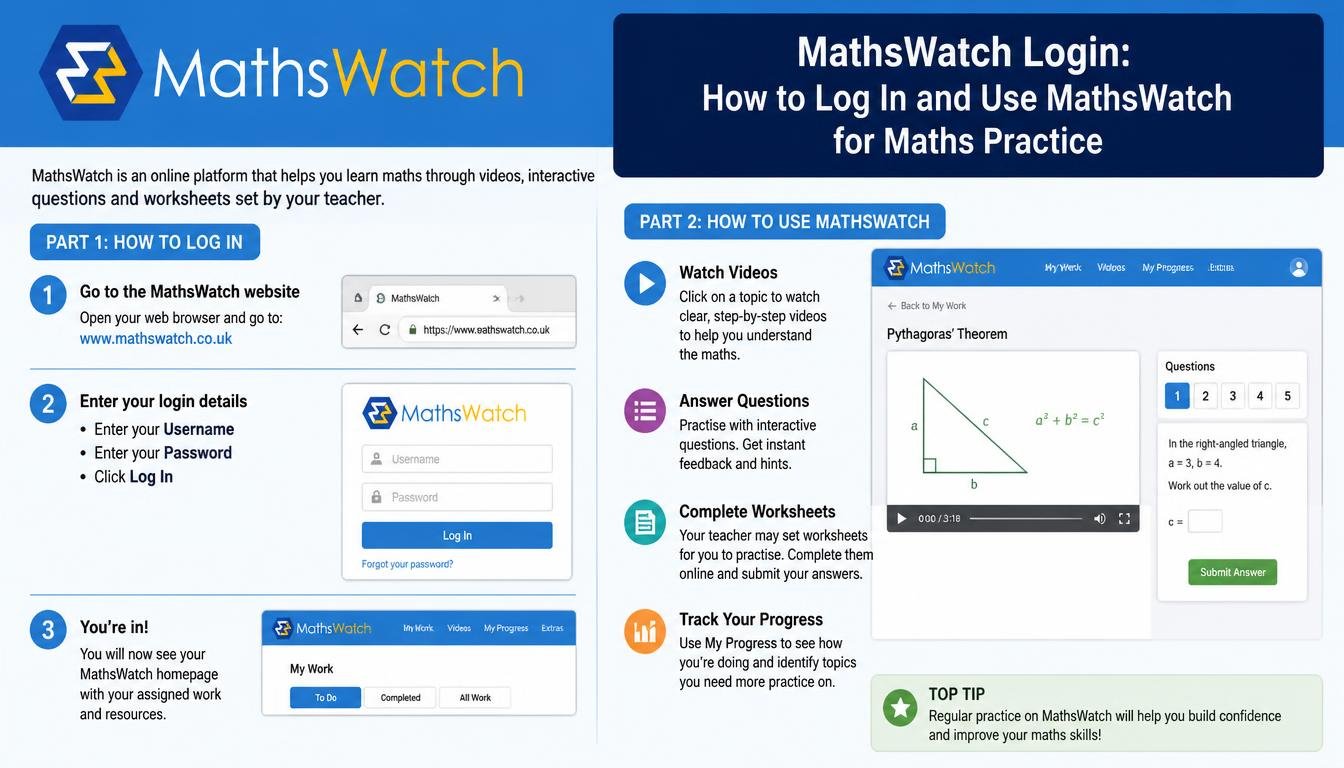
If you are a student looking for help with maths homework, revision, or difficult topics, MathsWatch can be a useful online learning platform. It provides students with access to maths video tutorials, interactive questions, teacher-assigned homework and feedback, allowing you to study both at school and at home. Depending on the subscription provided by your school, MathsWatch can include content for areas such as Key Stage 3, GCSE, IGCSE, Primary and other mathematics programmes. The platform is designed to help you understand mathematical topics by watching explanations and then practising what you have learned through questions. MathsWatch says its videos provide explanations that students can pause and replay, while its interactive questions provide feedback on performance.
For many students, however, the first challenge is simply understanding how to log in to MathsWatch and what to do after logging in. If you have been given a MathsWatch username and password by your teacher, you can use those details to access your account. Once you are inside your account, you can normally find work assigned by your teacher, check completed work, watch relevant maths videos and practise questions. This guide explains the MathsWatch login process step by step and then shows you how to make better use of the platform so that you are not simply completing homework but actually improving your understanding of mathematics.
What Is MathsWatch?
MathsWatch is an online mathematics learning platform used by schools and educational organisations to provide students with maths teaching, practice and assessment resources. The platform combines video instruction with interactive questions and teacher-assigned tasks, giving students an opportunity to learn a topic and then apply the method themselves. MathsWatch describes its videos as providing expert explanations that students can pause and replay, while its interactive questions can provide immediate feedback. The platform also records student performance so that teachers can monitor progress and identify areas where additional support may be needed.
One of the useful things about MathsWatch is that it can support independent learning. If you do not understand a topic during a lesson, you may be able to find the relevant MathsWatch video, watch the explanation again and then attempt practice questions. This is particularly useful when preparing for tests or exams because you can return to topics that you found difficult rather than relying entirely on your memory from a previous classroom lesson. MathsWatch also includes real exam-style questions within its resources, although the exact content available to you depends on your school’s subscription.
MathsWatch Login: How to Log In
To use MathsWatch as a student, your school or educational organisation normally needs to provide you with an account. MathsWatch’s student guide explains that students should use the login details supplied by their teacher and access the platform through a web browser. The guide specifically mentions vle.mathswatch.co.uk as the MathsWatch learning environment and recommends Google Chrome, while also noting that other browsers can work.
The first step is to open the MathsWatch website or the MathsWatch learning platform provided by your school. You should then enter the username and password supplied to you by your teacher or school. Make sure that you enter the information carefully because usernames and passwords can be case-sensitive or may contain characters that are easy to mistype. If your school has provided a common initial password, MathsWatch recommends changing it after your first login so that your account has a personal password. Your account should be treated as your own, and MathsWatch’s terms state that students should not share their username or password with other people.
If you have successfully logged in, you should be taken into the student area of MathsWatch. The exact appearance of the platform can change over time, but the important thing is to look for your assigned work, learning resources and other available features. If you cannot log in, do not repeatedly guess your password or use somebody else’s account. Instead, check that you are using the correct username and password and contact your teacher or school if you still cannot access your account. MathsWatch’s student guide states that if a student forgets their password, they should contact their teacher, who can reset it.
What Can You Do After MathsWatch Login?
After logging into MathsWatch, one of the most important areas for students is the section showing work assigned by their teacher. According to the MathsWatch student guide, the My Work section shows tasks assigned to the student, including their due dates and scores for work that has already been completed. Colour-coded indicators can also help students identify work that is still due. This means that MathsWatch can function as more than a collection of maths videos; it can also be a place where you keep track of school-assigned mathematics tasks.
When you see an assignment, read the instructions carefully before starting. If it has a deadline, make a note of it rather than waiting until the last minute. Open the task and work through each question carefully, paying attention to the method as well as the final answer. If the platform provides feedback after you answer a question, use that feedback to identify exactly where your method went wrong. Maths is often about understanding a process, so simply changing an answer until you get it correct is less valuable than understanding why your original answer was incorrect.
How to Watch MathsWatch Videos Effectively
MathsWatch videos are one of the most useful parts of the platform when you are struggling with a particular maths topic. Instead of watching a video passively from beginning to end, try to use it as a lesson. Before starting, identify the exact topic you are struggling with, such as fractions, simultaneous equations, percentages, algebraic manipulation, probability, graphs or geometry. Then watch the explanation carefully and pause when the teacher demonstrates an important step. MathsWatch specifically highlights the ability for students to pause and replay explanations, which makes the platform useful when you need to spend more time on a particular part of a topic.
A good method is to keep a piece of paper beside you while watching. When the video demonstrates an example, pause it before the solution is revealed or completed and try the next step yourself. This changes the experience from simply watching someone else do mathematics into actively practising the skill. Once you have completed the example, compare your method with the explanation. If your answer is different, do not immediately assume that you are completely wrong; check the individual steps and identify where your method changed from the demonstrated method. This habit can make MathsWatch much more effective for revision.
How to Complete MathsWatch Homework
If your teacher has assigned MathsWatch homework, you should treat it as a learning opportunity rather than simply a task that needs to be finished. Start by reading the assignment requirements and checking the deadline. If the homework covers a topic that you have not understood well in class, watch the relevant explanation before attempting the questions. If you already feel confident with the topic, you can begin with the questions and return to the video if you encounter a difficult problem.
MathsWatch’s student guide explains that students can see assigned work, due dates and completed scores in the My Work section. The platform also allows teachers to leave feedback on challenging questions, and students may be able to respond or request additional help. This makes it important to read teacher feedback rather than ignoring it after you have received your mark. A teacher’s comment can tell you what part of your mathematical thinking needs improvement and can help you avoid repeating the same mistake in your next assignment.
How to Use MathsWatch for Revision
MathsWatch can also be useful when you do not have a specific homework task to complete. For revision, begin by making a list of the topics that you need to study. You can divide your revision into three categories: topics you understand well, topics you partly understand and topics that you find difficult. Spend less time simply reviewing topics that you already know and more time actively working on the areas where you are making mistakes. Use MathsWatch videos to refresh your understanding and then practise questions to test whether you can actually apply the method without assistance.
For example, imagine that you understand basic algebra but regularly make mistakes when solving equations. Rather than watching several unrelated videos, focus your revision on equations and practise a range of questions. Write down the steps you use, check your answers and look for patterns in your mistakes. If you repeatedly make the same error, return to the relevant explanation and try another set of questions. This creates a cycle of learn, practise, check and improve, which is much more effective than watching videos without attempting problems yourself.
How to Improve Your Maths Using MathsWatch
The biggest mistake students can make when using an online maths platform is believing that watching an explanation automatically means they have learned the topic. Watching is only the first stage. Mathematics requires active practice, so after watching a MathsWatch video you should attempt questions without copying the demonstrated example. Try to complete the question independently, show your working and then use the available feedback to check your understanding. MathsWatch specifically promotes questions in which students can enter working for more complex problems, with its system designed to assess more than just the final answer.
You should also keep track of the mistakes you make. Create a small revision list containing topics such as “factorising”, “circle theorems”, “ratio”, “standard form” or whatever areas you personally find difficult. Every time you make a repeated mistake, add it to the list. When you revise, return to those topics and attempt new questions. Over time, your list should become shorter as you turn weaknesses into strengths. This approach is more valuable than simply completing a large number of questions because it focuses your effort on the areas that are actually preventing you from achieving higher marks.
MathsWatch Login Problems: What Should You Do?
If your MathsWatch login is not working, first check that you are using the correct account details. Make sure there are no accidental spaces before or after your username or password and check that your keyboard is entering the characters correctly. If you recently changed your password, make sure you are using the new password rather than an older one. If you are using a school computer, tablet or shared device, check whether another student’s account is already signed in and log out before attempting to use your own account.
If you have forgotten your password, MathsWatch’s student guidance says to contact your teacher because they can reset it. You should never ask another student for their password or attempt to use somebody else’s account. MathsWatch’s terms specifically state that users should not share their usernames or passwords. If the problem appears to be technical rather than related to your account details, your teacher or school can help determine whether the issue is with your account, device, browser or the MathsWatch service.
Can You Use MathsWatch at Home?
Yes, MathsWatch is designed to support learning outside the classroom as well as in school. MathsWatch states that its online subscription can be accessed from school, home and other locations, allowing students to use the resource beyond normal classroom hours. This makes it particularly useful for students who want to revisit a lesson, complete homework, practise a difficult topic or prepare for an upcoming assessment at home.
When studying at home, try to create a distraction-free environment. Keep your maths book, calculator if permitted, paper and pen nearby and work through problems rather than simply watching videos. If you are preparing for an examination, combine MathsWatch with your school’s revision materials, class notes and past-paper practice. MathsWatch can be an important part of your revision routine, but it should support your overall study rather than replace all other forms of practice.
How MathsWatch Can Help Before a Maths Test
If you have a maths test coming up, start your preparation several days in advance rather than trying to learn everything on the night before the test. Make a list of the topics that will appear in the assessment and identify which ones are strongest and weakest. Use MathsWatch videos to refresh topics that you have forgotten and then practise questions to make sure that you can solve problems independently. If your teacher has previously assigned work through MathsWatch, look back at questions where you lost marks and use those mistakes as a revision guide.
A particularly effective strategy is to practise without looking at the solution until you have completed the problem yourself. When you get an answer wrong, investigate the reason. Did you use the wrong formula? Did you make an arithmetic error? Did you misunderstand the question? Did you forget a unit? Did you skip a step in your working? Understanding the reason for a mistake is often more valuable than simply seeing the correct answer because it helps prevent the same error from appearing in your next test.
MathsWatch for GCSE and Other Maths Courses
The MathsWatch content available to you depends on the subscription and programme provided by your school. MathsWatch currently describes resources covering areas including GCSE/IGCSE, Key Stage 3, Primary and AS-Level content, although the exact features and interactive resources available can differ between programmes. For GCSE students, the platform provides topic-based video content and practice resources that can be used alongside classroom teaching and examination preparation.
If you are studying for GCSE mathematics, do not assume that completing every available video is the best revision strategy. Instead, focus on the specification and topics required for your particular course and exam board. Use MathsWatch to strengthen areas where your confidence is low, and then combine that learning with exam-style questions. The goal is not simply to spend more hours on MathsWatch; the goal is to use the time effectively so that you become more accurate, more confident and better able to solve unfamiliar problems.
Tips for Getting the Most From MathsWatch
The first tip is to watch with a purpose. Do not randomly click through maths videos because you think watching more content automatically means you are revising effectively. Choose a specific topic and identify what you want to understand before you begin. The second tip is to pause and practise. When an example is demonstrated, stop the video and attempt the calculation yourself. The third tip is to write down your mistakes because repeated errors often reveal the exact topics that need more attention.
Another important tip is to use feedback properly. If MathsWatch tells you that an answer is incorrect, take a moment to find the mistake instead of immediately submitting another answer. If your teacher leaves feedback, read it carefully and apply it to future questions. You should also start homework early whenever possible. Starting several days before a deadline gives you time to ask your teacher for help if you encounter a topic that you cannot understand. Finally, protect your login details and use your own account so that your progress and assignments remain associated with you.
Why MathsWatch Is Useful for Students
MathsWatch can be useful because it combines several parts of the learning process in one online environment. Students can access explanations, practise questions, complete teacher-assigned work and receive feedback depending on the features and subscription available through their school. The platform is also designed to work across different devices, making it possible to study away from a traditional classroom environment.
Perhaps the biggest advantage for a student is the ability to repeat an explanation. In a classroom, a teacher may explain a topic once and then move on because the lesson has to continue. With an online video, you can pause, replay and revisit the explanation when you need it. This can make difficult mathematical concepts less intimidating because you can learn at your own pace and then test your understanding through practice questions.
Conclusion
MathsWatch can be a valuable resource for students who want to improve their mathematics, complete homework and prepare for tests and exams. The process begins with a successful MathsWatch login, but logging in is only the beginning. Once you have access to your account, you should make effective use of the platform by checking your assigned work, watching relevant maths videos, practising questions, reading feedback and returning to difficult topics until you understand them. MathsWatch is designed to give students access to explanations and practice, but your progress ultimately depends on how actively you use those resources.
If you are struggling with a particular topic, do not simply memorise an answer. Find the relevant explanation, understand the method, attempt questions independently and investigate your mistakes. If you cannot access your account, check your login details and contact your teacher when necessary rather than attempting to use someone else’s account. By using MathsWatch as part of a consistent study routine, you can turn it from a homework website into a useful tool for building confidence, improving mathematical skills and preparing for important assessments.
Frequently Asked Questions About MathsWatch
What is MathsWatch?
MathsWatch is an online mathematics learning platform used by schools to provide students with maths videos, interactive questions, assignments and feedback. The exact content available depends on the subscription and programme provided by the student’s school.
How do I log in to MathsWatch?
To log in to MathsWatch, use the login details provided by your school or teacher and access the MathsWatch learning platform through a compatible web browser. MathsWatch’s student guide identifies vle.mathswatch.co.uk as the learning environment and recommends using Google Chrome, although other browsers may also work.
What if I forget my MathsWatch password?
If you forget your MathsWatch password, contact your teacher. The MathsWatch student guide states that teachers can reset a student’s password. You should not attempt to access another student’s account.
Can I use MathsWatch at home?
Yes. MathsWatch’s online service is designed to be accessible outside school, including from home, so students can use it for homework, revision and additional practice.
What can I find after logging into MathsWatch?
Depending on your school’s subscription and the features enabled for your account, you may be able to access assigned homework, tests, maths videos, interactive questions, scores and teacher feedback. The student guide explains that the My Work area contains assigned tasks and information such as due dates and completed scores.
Can MathsWatch help me revise for GCSE maths?
Yes. MathsWatch provides GCSE-related resources, including video instruction and practice material, although the exact resources available depend on your school’s subscription and course. For the best results, combine MathsWatch revision with your class notes, teacher guidance and exam-style practice.
How should I use MathsWatch videos for revision?
Choose a specific topic that you need to improve, watch the explanation carefully, pause when necessary and attempt the examples yourself. After watching, practise questions without relying on the video so you can determine whether you actually understand the method.
Does MathsWatch mark my answers?
MathsWatch provides interactive questions and feedback, and its platform highlights technology designed to assess students’ working as well as final answers for certain multi-step questions. The exact functionality available can depend on the resource and subscription.
Can I change my MathsWatch password?
MathsWatch’s student guidance explains that students can change their password through their account details. The platform recommends changing an initial generic password provided by a school so that students have a personal password.
Should I share my MathsWatch password with a friend?
No. You should keep your MathsWatch login details private. MathsWatch’s terms state that authorised users should not make their username or password available to other people.
Why is MathsWatch not letting me log in?
First, check that your username and password are correct and that you are using your own account. If you have forgotten your password, contact your teacher for assistance. If your credentials are correct but you still cannot access MathsWatch, your school may need to investigate the account or technical issue.
Is MathsWatch free for individual students?
MathsWatch’s current subscription information states that its subscriptions are available to schools, colleges and tutoring services rather than individual users. If your school has a MathsWatch subscription, your access is normally provided through the organisation’s account system.
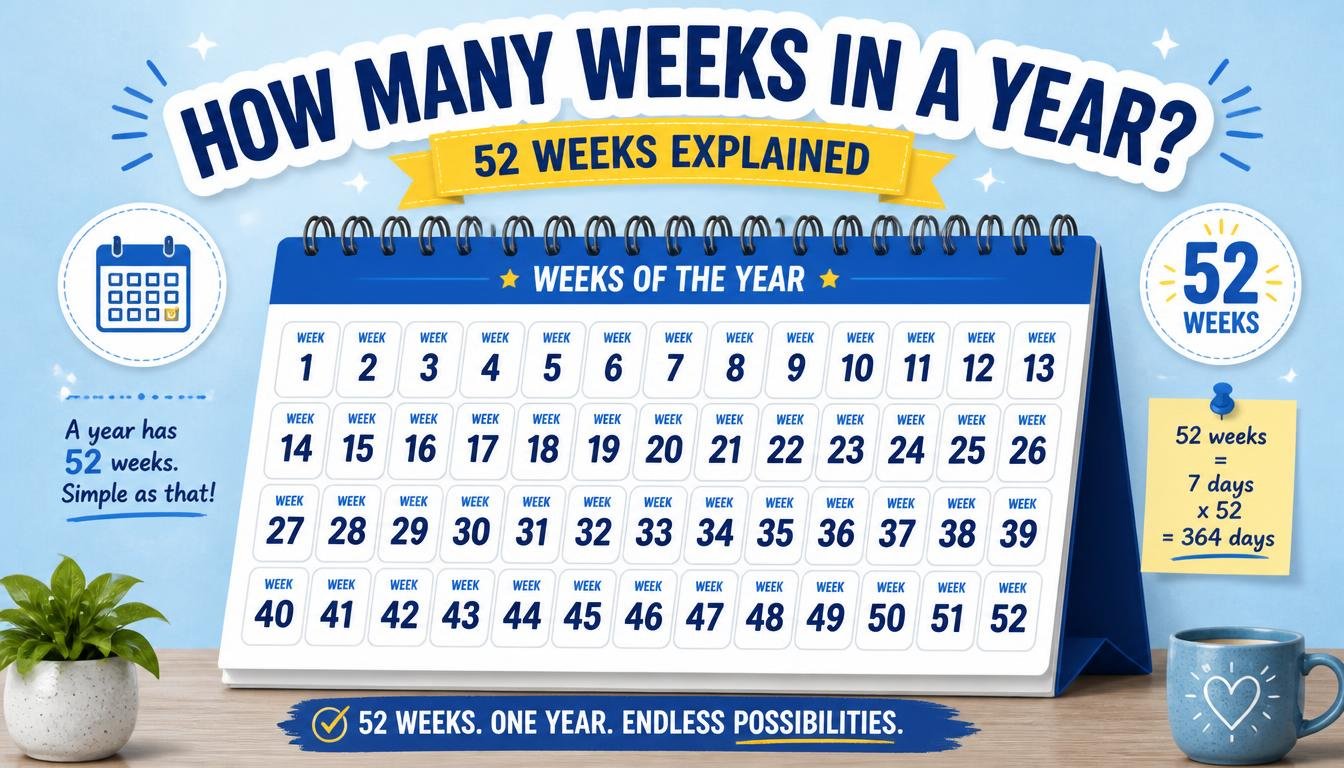
If you have ever wondered how many weeks in a year, the simple answer is that a normal year has 52 full weeks plus 1 extra day. A standard year contains 365 days, and because one week contains 7 days, dividing 365 by 7 gives approximately 52.14 weeks. This means that a calendar year does not contain exactly 52 weeks, even though we commonly say that there are 52 weeks in a year. A leap year is slightly different because it contains 366 days, which equals 52 full weeks plus 2 extra days. Understanding the number of weeks in a year can be useful for planning schedules, calculating working weeks, organizing school terms, setting fitness or savings goals, managing projects, and understanding calendars.
How Many Weeks Are in a Year?
A regular year has 52 weeks and 1 day. The calculation is straightforward: there are 365 days in a standard year, while each week has 7 days. When you divide 365 by 7, the result is 52 with a remainder of 1. Therefore, there are 52 complete seven-day periods in a normal year, with one day left over. This is why people generally describe a year as having 52 weeks, even though the exact mathematical value is approximately 52.14 weeks. In everyday conversation, “52 weeks in a year” is the most practical answer, but when you are working with precise dates or calendar calculations, the additional day is important.
How Do You Calculate Weeks in a Year?
The easiest way to calculate the number of weeks in a year is to divide the total number of days in the year by 7. For a normal year, the calculation is 365 ÷ 7 = 52 weeks and 1 day. For a leap year, the calculation is 366 ÷ 7 = 52 weeks and 2 days. This calculation explains why a year does not fit perfectly into an exact number of seven-day weeks. The extra days accumulate over time and are one of the reasons our calendar requires leap years to remain aligned with the Earth’s movement around the Sun.
Does a Year Have 52 or 53 Weeks?
The most common answer is 52 weeks, but some calendar years can contain 53 numbered weeks depending on the calendar system and the day on which the year begins and ends. This is an important distinction because there is a difference between saying that a year contains 52 complete periods of seven days and saying that a calendar system assigns week numbers to dates. A normal 365-day year always contains 52 complete weeks and one additional day, while a 366-day leap year contains 52 complete weeks and two additional days. Under certain week-numbering standards, those extra days can result in a year being designated as having Week 53.
The idea of a 53-week year is particularly relevant to businesses, payroll departments, accounting systems, retailers, and organizations that use weekly reporting. If a company pays employees every week, for example, most years have 52 weekly pay periods, but certain calendar arrangements can result in a 53rd weekly period. The exact occurrence depends on the calendar and the rules being used to determine week numbers, so “53 weeks in a year” should not be interpreted as meaning that every year contains 53 complete seven-day periods.
How Many Weeks Are in a Normal Year?
A normal, or common, year contains 365 days. Since seven days make one week, 365 days can be divided into 52 complete weeks with one day remaining. Therefore, the most accurate everyday answer to how many weeks are in a year is 52 weeks and 1 day. If you are estimating time for general planning, saying “52 weeks” is usually sufficient. However, if you are calculating an exact deadline, financial schedule, recurring payment plan, or calendar period, remembering the extra day can prevent small errors.
The extra day also explains why the same date does not always fall on the same day of the week from one year to the next. For example, after a normal year, the calendar shifts by one weekday because 365 days is one day longer than 52 complete weeks. After a leap year, the shift is generally two weekdays because a leap year has 366 days. This simple relationship between days and weeks is one of the fundamental features of the calendar.
How Many Weeks Are in a Leap Year?
A leap year contains 366 days, which means it has 52 full weeks and 2 extra days. The additional day is February 29, which is added to the calendar to help keep the calendar year synchronized with the Earth’s orbit around the Sun. Mathematically, 366 divided by 7 equals approximately 52.29 weeks. Therefore, although people often say that a leap year has 52 weeks, the more precise answer is 52 complete weeks plus 2 additional days.
Leap years normally occur every four years, although there are exceptions for century years. Under the Gregorian calendar, a century year is not a leap year unless it is evenly divisible by 400. For example, the year 2000 was a leap year, while 1900 was not. These rules help keep the calendar accurate over long periods rather than allowing the dates to gradually drift away from the seasons.
How Many Days Are in 52 Weeks?
There are 364 days in 52 weeks because one week contains 7 days and 52 multiplied by 7 equals 364. This is one of the easiest ways to understand why a normal year has an extra day. A standard year has 365 days, so after counting 52 complete weeks, one day remains. A leap year has 366 days, meaning that after 52 complete weeks, two days remain.
This difference may seem small, but it becomes important when comparing annual schedules with weekly schedules. For example, someone who sets a goal for every week of the year may think of the year as exactly 52 weeks, but a full calendar year lasts one or two days longer than 52 weeks depending on whether it is a normal year or a leap year. For long-term planning, those extra days can affect the exact date on which a weekly schedule finishes.
How Many Weeks Are in a Month?
Unlike a year, a month does not have a fixed number of weeks because months have different numbers of days. Most months contain 28, 30, or 31 days. A 28-day month contains exactly 4 weeks, while a 30-day month contains 4 weeks and 2 days, and a 31-day month contains 4 weeks and 3 days. February normally has 28 days, making it exactly 4 weeks long, while during a leap year February has 29 days, or 4 weeks and 1 day.
Because months do not all contain the same number of days, it is not accurate to say that every month contains exactly four weeks. Four weeks equal 28 days, but most months are longer than 28 days. This is also why multiplying 12 months by 4 weeks gives only 48 weeks, which is fewer than the approximately 52 weeks in a year. The additional days in most months add up to the difference.
How Many Weeks Are in 365 Days?
There are 52 weeks and 1 day in 365 days. The calculation is simply 365 divided by 7. Since 7 goes into 365 fifty-two complete times, 52 × 7 equals 364, leaving 1 day. As a decimal, 365 ÷ 7 is approximately 52.14 weeks.
This calculation is useful when converting between days and weeks. For example, if you are creating a yearly study plan, exercise program, savings plan, or work schedule, you can use 52 weeks as a convenient approximation. If the schedule needs to match exact calendar dates, however, you should account for the additional day rather than treating every year as exactly 364 days.
How Many Weeks Are in 366 Days?
There are 52 weeks and 2 days in 366 days. A leap year has one more day than a standard year, so its total is 366 days. Dividing 366 by 7 gives approximately 52.29 weeks. There are still only 52 complete seven-day periods, but two days remain after those weeks have been counted.
The extra day in a leap year can affect annual schedules and day-of-the-week calculations. It also contributes to the way dates shift through the calendar over time. Although one additional day may not seem significant, the leap-year system is essential for keeping the calendar synchronized with the astronomical year.
Why Does a Year Have 52 Weeks?
A year has approximately 52 weeks because the Earth takes about one year to complete its orbit around the Sun, while a week is a seven-day unit used in our calendar system. The standard calendar year is 365 days long, and 365 days divided by 7 gives just over 52 weeks. Since 52 weeks account for 364 days, the remaining one day is carried into the calendar structure. Every few years, an additional day is inserted as February 29 to create a leap year containing 366 days.
The relationship between weeks and years is therefore not based on an exact mathematical division. Instead, the calendar combines several different units of time—days, weeks, months, and years—that do not divide evenly into one another. A week is always seven days, but a month can have different lengths, and a year can have 365 or 366 days. This is why calendar calculations sometimes produce results that are slightly different from simple approximations.
52 Weeks in a Year for Work and Planning
Knowing that a year contains approximately 52 weeks is useful for many types of planning. Businesses often use weekly schedules to monitor sales, productivity, expenses, employee hours, and project progress. Individuals can also divide annual goals into weekly targets. For example, a person who wants to read a certain number of books, save money, exercise regularly, or learn a new skill can create a 52-week plan and assign a small target to each week.
However, it is important to distinguish between a 52-week planning year and a calendar year. A 52-week planning system contains exactly 364 days, while a normal calendar year contains 365 days and a leap year contains 366 days. As a result, a 52-week plan may not begin and end on exactly the same calendar dates each year. This distinction is especially important for organizations that use weekly accounting or payroll systems.
Is 52 Weeks Exactly One Year?
No, 52 weeks is not exactly one calendar year. Since 52 weeks contain 364 days and a normal year contains 365 days, a standard year is one day longer than 52 weeks. A leap year is two days longer because it contains 366 days. In everyday language, however, people commonly round a year to 52 weeks because it is a convenient and useful approximation.
The difference becomes noticeable when calculating dates over long periods. If you repeatedly add exactly 52 weeks to a date, the resulting date can gradually differ from the same calendar date in subsequent years. For exact calendar calculations, it is therefore better to work with actual dates and account for leap years rather than assuming that every year consists of exactly 52 weeks.
How Many Weeks Are in a Year Compared With Months?
There are approximately 52 weeks in a year and 12 months in a year, but the relationship between the two is not an exact whole-number conversion. If every month contained exactly four weeks, 12 months would equal 48 weeks, but a calendar year is longer because most months contain more than 28 days. Those additional days across the months add up to approximately four extra weeks plus the remaining days, producing the familiar total of about 52 weeks.
This is why saying that a month equals four weeks is useful for rough estimates but not always accurate for calendar calculations. Four weeks is exactly 28 days, whereas a month can contain 28, 29, 30, or 31 days. When accuracy matters, it is better to calculate using the actual number of days in the specific months involved.
Quick Facts About Weeks in a Year
A standard year contains 365 days, which equals 52 complete weeks and 1 day. A leap year contains 366 days, which equals 52 complete weeks and 2 days. One week always contains 7 days, and 52 weeks contain exactly 364 days. A year can sometimes be described as having 53 calendar weeks depending on the week-numbering system and the arrangement of dates, but this does not mean that every year contains 53 complete seven-day periods.
The most useful answer depends on what you are trying to calculate. If someone asks casually, “How many weeks are in a year?” the answer is 52 weeks. If you want mathematical precision, the answer is 52 weeks and 1 day in a normal year or 52 weeks and 2 days in a leap year. If you are dealing with calendar week numbers, payroll, or business accounting, you may also need to determine whether that particular calendar year contains a Week 53 under the relevant week-numbering rules.
Conclusion
So, how many weeks in a year? The simple answer is 52 weeks, but the precise answer is slightly more detailed. A normal year has 365 days, which makes 52 weeks and 1 extra day, while a leap year has 366 days, making 52 weeks and 2 extra days. Since 52 weeks contain exactly 364 days, neither a normal year nor a leap year divides perfectly into seven-day weeks. In some calendar and business systems, a year can also be identified as having 53 numbered weeks, depending on the week-numbering rules being used.
Understanding the difference between 52 weeks, 52 weeks plus extra days, and a calendar year with a possible Week 53 can make time calculations much easier. Whether you are planning a 52-week personal goal, creating a work schedule, calculating weekly payments, organizing a school year, or simply trying to understand the calendar, remembering that 52 weeks equals 364 days provides the key. From there, the extra day in a normal year and the extra two days in a leap year explain the rest.
Frequently Asked Questions About How Many Weeks Are in a Year
1. How many weeks are in a year?
A normal year has 52 complete weeks and 1 extra day because it contains 365 days. Since 52 weeks equal 364 days, one day remains. For everyday purposes, people usually say that a year has 52 weeks.
2. Does every year have 52 weeks?
Every year has at least 52 complete seven-day weeks. A normal year has 52 weeks plus 1 day, while a leap year has 52 weeks plus 2 days. Depending on the week-numbering system, some calendar years can also include a numbered Week 53.
3. How many weeks are in a leap year?
A leap year contains 52 complete weeks and 2 additional days because it has 366 days. Dividing 366 by 7 gives approximately 52.29 weeks.
4. Is 52 weeks the same as one year?
Not exactly. 52 weeks equal 364 days, while a normal calendar year has 365 days. Therefore, 52 weeks are one day shorter than a normal year and two days shorter than a leap year.
5. How many days are in 52 weeks?
There are 364 days in 52 weeks. The calculation is 52 × 7 = 364.
6. Can a year have 53 weeks?
Yes, some calendar systems can designate a year as having 53 numbered weeks. This depends on the week-numbering rules and the day on which the calendar year begins and ends. It does not mean that a normal year contains 371 days.
7. How many weeks are in a month?
It depends on the month. A 28-day month has exactly 4 weeks, while a 29-day month has 4 weeks and 1 day, a 30-day month has 4 weeks and 2 days, and a 31-day month has 4 weeks and 3 days.
8. How many weeks are in 365 days?
There are 52 weeks and 1 day in 365 days. In decimal form, 365 days is approximately 52.14 weeks.
9. How many weeks are in 366 days?
There are 52 weeks and 2 days in 366 days. In decimal form, 366 days is approximately 52.29 weeks.
10. Why does a year have extra days after 52 weeks?
Because 52 weeks contain only 364 days, while a normal year contains 365 days. The additional day makes the calendar year slightly longer than 52 weeks. A leap year adds another day, resulting in 366 days.
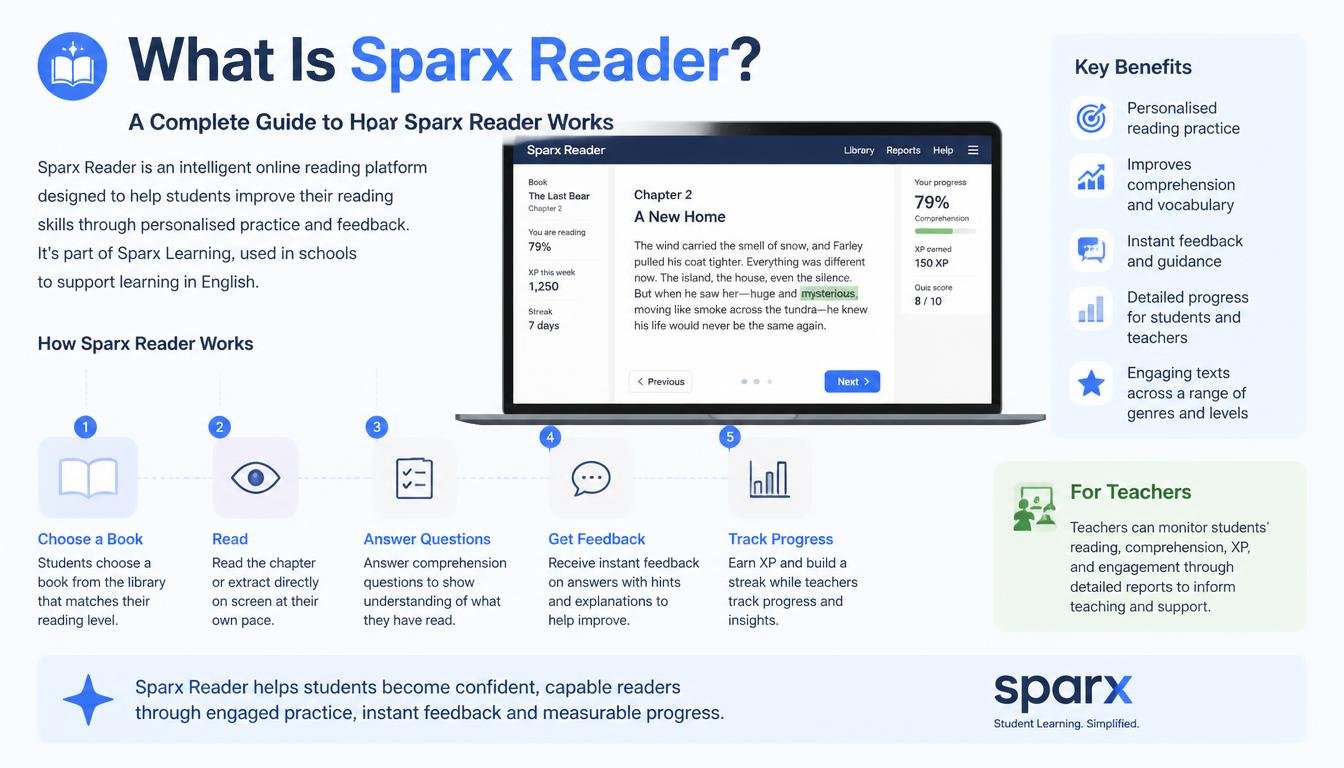
Sparx Reader is a digital reading platform designed to help students develop regular, careful and independent reading habits. Rather than simply giving students an ebook and asking them to read it, Sparx Reader combines digital books with personalised recommendations, reading checks, comprehension questions and a points-based system called Sparx Reader Points (SRP). The platform is primarily designed for schools and gives teachers visibility into students’ reading activity while helping students build a consistent reading routine. According to Sparx Reader’s current help resources, students are offered books according to factors such as their age, reading ability, previous reading performance and book preferences, while the platform uses questions throughout books to encourage students to read carefully rather than simply skim the text.
For a student or parent who has recently heard the name Sparx Reader, it can initially be difficult to understand exactly what the platform does. Is it an online library, a reading homework system, a comprehension tool, or all three? In practice, it combines several of these functions. Students read ebooks through the platform, answer questions after sections of text, earn Sparx Reader Points when they demonstrate careful reading, and work towards reading targets set by their school. At the same time, teachers can monitor reading activity, see completion information and use reading data to identify students who may need additional support. This makes Sparx Reader different from a traditional ebook app because its central purpose is not simply to provide access to digital books; it is designed to encourage regular, accountable and attentive reading.
What Is Sparx Reader?
Sparx Reader is a school-focused digital reading platform that helps students practise independent reading through personalised ebooks, comprehension checks and weekly reading homework. The platform is designed around the idea that students can develop stronger reading habits when they read regularly and when their understanding of what they have read is checked. Instead of relying only on the number of pages or words a student has completed, Sparx Reader uses questions at natural points in a book to check whether the student has been paying attention to important events, characters and themes. Students who successfully complete these checks can earn Sparx Reader Points, which contribute towards their homework target and can also be used by schools as part of recognition or reward systems.
One of the important features of Sparx Reader is personalisation. When students first begin using the platform, their initial book recommendations can be based on information such as their age, reading assessment and performance during the onboarding process. As students continue reading, Sparx Reader gathers information about their reading behaviour and uses it to improve future book recommendations. Students are normally offered a small selection of books rather than an enormous catalogue to choose from, and the platform also considers factors such as previous book ratings and genre preferences. This approach is intended to make it easier for students to find a suitable book without becoming overwhelmed by too many choices.
How Does Sparx Reader Work?
The basic Sparx Reader process is straightforward. A student logs into the platform through their school, accesses their digital bookshelf and chooses from the books available to them. The student then reads the selected ebook on the platform. The book is divided into sections, and after students have read a section, Sparx Reader presents a small number of questions designed to check whether they have read and understood the material. The text is removed from view while the questions are displayed, which is intended to discourage students from simply searching through the passage for an answer. If the student passes the check, they earn Sparx Reader Points. If they do not pass on the first attempt, they can reread the relevant section and try again.
The questions are not intended to be difficult tests that students must study for in advance. Instead, they are designed around important information from the section the student has just read. Sparx Reader explains that questions focus on significant elements such as important events, characters and themes, and that students should generally be able to pass the checks if they have read the preceding section carefully. This is an important part of how the system works because it changes the purpose of the reading session: students are encouraged not merely to move through pages quickly, but to pay attention to what is happening and retain important information. The platform also gives students a limited amount of time to answer each question, further encouraging them to rely on their understanding of the text rather than repeatedly searching for an answer.
How Does Sparx Reader Homework Work?
Sparx Reader homework is based on a target number of Sparx Reader Points rather than simply requiring a student to read a fixed number of pages. Each homework task has an SRP target, and students earn those points by reading carefully and successfully completing the reading checks. This means the amount of text a student reads is not necessarily identical to another student’s experience because Sparx Reader takes individual reading speed into account when awarding points. The platform’s stated aim is to make the reading workload fairer by adapting points to students’ reading speeds rather than treating word count alone as the measure of achievement.
Students can also catch up on previous homework if they have missed a task. Sparx Reader explains that students can work on their current homework or catch up with previous incomplete homework, with additional reading being applied to the relevant outstanding task. This can be useful in a school environment because reading progress does not necessarily stop simply because a student missed a particular deadline. The platform is structured around creating a continuing reading habit, with weekly targets providing a regular reason for students to return to their books and keep reading.
What Are Sparx Reader Points?
Sparx Reader Points, commonly abbreviated as SRP, are points students earn for careful reading and successfully completing the questions that appear during their books. SRP is one of the central elements of the Sparx Reader system because it provides students with a measurable indication of their reading progress. Rather than rewarding students simply for opening a book or rapidly completing a large number of pages, the platform connects points with successful reading checks. This means that students have an incentive to concentrate on the text and understand what they are reading.
Another important point is that Sparx Reader Points are designed to account for differences in reading speed. According to Sparx Reader’s guidance, the number of points awarded is adapted to each student’s reading speed, helping students with different levels of reading ability work towards their targets on a more comparable basis. Schools can also use SRP as part of their own reward and recognition systems. The platform provides features such as leaderboards and certificates, although schools can decide how they want to use these features to recognise reading achievement.
What Are Sparx Reader Questions?
Sparx Reader questions are short comprehension checks that appear at natural breaks in the digital books. Their purpose is to encourage careful reading and provide evidence that students have understood the section they have just completed. The platform removes the text when the questions appear, meaning students cannot simply keep the passage open and scan it for an answer. If students do not pass a check, they can reread the section and attempt the questions again. This makes the questions an integrated part of the reading experience rather than a separate test that takes place after the entire book has been completed.
The design of these questions is particularly important to understanding the purpose of Sparx Reader. The platform says its questions concentrate on important information rather than insignificant details. For example, a question might require a student to remember something important about a character, an event in the story or a developing theme. The goal is therefore to encourage students to develop the habit of paying attention while they read. Over time, regular reading combined with these comprehension checks can help students become more conscious of whether they are actually understanding the text rather than simply moving their eyes across the page.
What Books Are Available on Sparx Reader?
The Sparx Reader library contains a growing collection of ebooks covering different genres and reading levels. Sparx Reader states that its library includes books selected with different student experiences and interests in mind, and the platform uses information about students’ previous reading and preferences to help improve recommendations. Teachers can also access the library to search for books, filter by reading age and explore information such as summaries, genres, themes and minimum age guidance.
Book recommendations are not completely random. When a student chooses a new ebook, Sparx Reader can offer a selection of four books based on factors including the student’s actual age, confidence demonstrated through previous reading, and how the student has rated books they have already read. Genre preferences can also influence the selection. This gives students some control over what they read while keeping the available choices within a range that the platform considers appropriate for the individual student. If a student does not like a particular option, Sparx Reader also provides a way to indicate that the book is not suitable for them and receive another option within the system’s limits.
Is Sparx Reader Suitable for Different Reading Abilities?
One of the main ideas behind Sparx Reader for students is that reading material should be matched to a student’s reading ability rather than giving every student exactly the same book. Sparx Reader currently describes its library as covering students aged around 11–16 while including reading ages ranging from approximately 6 to 17+. It also provides high-interest, low-reading-age books intended to make more mature or older-interest material accessible to students who have lower reading ages. This is significant because a student who struggles with reading may be discouraged if every available book appears obviously designed for much younger children.
The platform also states that questions can be adapted for students at lower reading levels, with language and question frequency adjusted to support those readers. The underlying idea is that students should still be able to experience success when they read carefully, even if their reading level differs significantly from that of their classmates. Sparx Reader’s approach therefore focuses not only on assigning a particular level of book but also on creating a reading experience in which students can demonstrate progress through careful attention and comprehension.
How Do Students Log In to Sparx Reader?
Sparx Reader login is generally managed through the student’s school. Sparx Reader’s current onboarding guidance says students can visit the Sparx Reader website, select their school and log in using their school Microsoft or Google account. Exact login arrangements can depend on how the student’s school has configured its Sparx Learning services, so students who cannot access their account should normally follow their school’s instructions or contact a teacher or school administrator for assistance.
Once students have logged in for the first time, they go through an onboarding process that introduces them to the platform. This can include questions about their reading habits and a training book designed to demonstrate how Sparx Reader works. After this introduction, students receive their initial book recommendations. If a student has completed a Sparx Reading Test, the assessed reading age can be used when choosing suitable books; otherwise, the platform can use information gathered during onboarding and the student’s performance on the training book.
What Happens When You First Start Sparx Reader?
When a student first starts using Sparx Reader, the platform is not simply a blank ebook library. The student first provides some information about their reading habits, then completes an introductory training experience that explains how reading and question checks work. The training book is designed to be short, allowing students to understand the system before they begin their normal reading homework. After this stage, the student receives a selection of books from which to choose. As the student continues to use the platform, Sparx Reader gathers more information about their reading behaviour and uses that information to improve future recommendations.
This gradual approach is important because the platform does not need to know everything about a student from the beginning. Initial information helps establish a starting point, but subsequent reading behaviour provides additional evidence about the student’s reading level and confidence. Sparx Reader says it normally finds a good level for most students within the first few weeks, depending on how much reading they complete and how seriously they engage with their homework. As a result, the first book a student receives should not necessarily be viewed as a permanent indication of their reading ability; recommendations can change as the platform learns more about the reader.
What Are the Benefits of Sparx Reader?
The main potential benefit of Sparx Reader is that it turns independent reading into a structured and trackable activity. For students, the combination of personalised books, reading questions and SRP can provide a clear reason to read regularly. For teachers, the platform provides information about reading activity, completion and accuracy that can help them identify students who may be struggling or disengaging. Sparx Reader also provides teachers with information about student book choices and reading behaviour, which can support more meaningful conversations about reading.
Another benefit is accessibility. Because the books are digital, students can access their reading through a browser rather than relying exclusively on a physical copy of a particular book at home. Sparx Reader also includes accessibility options such as dyslexia-friendly fonts, colour overlays and reading rulers. These features are intended to help more students access the reading experience in a way that works for them.
The platform also uses recognition and competition to encourage engagement. Students can earn SRP beyond their weekly homework target, and schools can use the points as part of their own reward systems. Sparx Reader also offers a leaderboard in which students can see their ranking among classmates, their year group or their school, although students can opt out. Certificates and other recognition resources are available to schools as additional ways of celebrating reading achievements.
How Does Sparx Reader Help Teachers?
For teachers, Sparx Reader is designed to reduce some of the administrative work associated with monitoring independent reading. The platform can automatically set personalised weekly reading homework based on a student’s reading level and the school’s homework schedule. Teachers can then use reporting tools to see how students are progressing, identify low completion or accuracy and investigate individual reading activity when necessary. This gives teachers more information than they would normally have if students simply reported that they had read a physical book at home.
The teacher-facing information can also help identify patterns. Sparx Reader’s guidance explains that teachers can examine a student’s SRP, accuracy, previous homework completion and activity timeline to determine whether a student is experiencing a temporary difficulty or whether a longer-term pattern may be developing. This information can then support conversations with students and allow teachers to provide targeted encouragement or intervention where necessary.
Is Sparx Reader Just an Online Library?
No. Although Sparx Reader includes an ebook library, describing it simply as an online library would miss one of its most important features. A traditional digital library primarily provides access to books, leaving the reader to decide how much to read and whether they understood it. Sparx Reader adds a structured system around the reading process. Students are given personalised book choices, read within the platform, encounter comprehension checks, earn SRP and work towards reading homework targets. Teachers can also monitor progress and use the resulting information to support students.
This distinction explains why Sparx Reader can be useful in a school setting. The platform is designed to create accountability around independent reading without requiring teachers to manually check every student’s reading after each homework session. At the same time, the reading questions are integrated into the books, meaning comprehension is checked as students progress rather than being treated as a completely separate activity at the end.
Does Sparx Reader Only Include Fiction?
Sparx Reader is strongly focused on sustained reading of ebooks and includes a wide range of fiction and genres, but the platform itself does not claim to replace all forms of reading. Its guidance specifically encourages students to read other types of material, including non-fiction, fact books and graphic novels, through libraries, classrooms and other sources alongside their Sparx Reader reading. The purpose of Sparx Reader is therefore better understood as supporting a particular strand of independent reading rather than becoming the student’s only source of reading material.
The platform also offers Set Texts, which allow teachers to assign certain curriculum texts to students for independent reading outside lesson time. These can be used for consolidation or as preparation for classroom learning, giving schools another way to use the platform beyond personalised recreational reading.
Is Sparx Reader Free for Students?
Whether a student can use Sparx Reader depends on their school’s use of the platform. Sparx Reader is primarily a school-based service, so students generally access the system through an account provided or managed by their school rather than signing up independently in the same way they might join a consumer reading app. Features available to students can therefore depend on what their school has implemented and assigned. Students who have been told to use Sparx Reader should normally follow their school’s login and homework instructions.
It is also worth remembering that Sparx Reader is not simply a general-purpose ebook subscription. Its features are designed around school reading programmes, including personalised reading, homework, comprehension checks, progress monitoring and teacher involvement. This school-based structure is one of the main differences between Sparx Reader and a standard consumer ebook platform.
How Can Students Get the Most From Sparx Reader?
Students will generally get more from Sparx Reader if they treat the reading itself as the main activity rather than trying to find shortcuts around the question checks. Because SRP is connected with successfully demonstrating careful reading, rushing through a book can be counterproductive. Sparx Reader specifically advises that students who read carefully should find the checks easier to pass, while students who skim or rush may fail checks and spend longer completing their homework. The most effective approach is therefore to read at a comfortable pace, pay attention to important details and think about what is happening in the story as you go.
Students should also make use of the book-rating and recommendation features. If a book is genuinely unsuitable or uninteresting, providing feedback can help the system improve future recommendations. At the same time, students should not expect every recommended book to be from their favourite genre. Sparx Reader deliberately balances personal preferences with the goal of exposing readers to a wider variety of books and experiences. Developing reading confidence often involves discovering genres and authors that a student may not initially expect to enjoy.
Sparx Reader vs Traditional Reading
Traditional physical-book reading and Sparx Reader each have advantages, and they do not have to be treated as competing approaches. A physical book can encourage reading away from a screen and gives students access to an enormous range of material. Sparx Reader, on the other hand, adds personalisation, digital accessibility, integrated comprehension checks and school-level monitoring. The platform itself describes its ebooks as one part of a wider reading strategy and encourages students to continue reading other materials outside Sparx Reader.
The strongest use of Sparx Reader is therefore likely to be as a structured component of a broader reading culture. It can help students establish a regular habit and give teachers evidence about independent reading, while school libraries, classroom reading and personal book choices can provide additional breadth. In this sense, Sparx Reader is not intended to eliminate traditional reading; it is designed to make one important part of independent reading more consistent, personalised and measurable.
Conclusion
Sparx Reader is a digital reading platform designed to help students develop consistent, careful and independent reading habits. It combines personalised ebook recommendations with comprehension questions, weekly homework targets and Sparx Reader Points, while providing teachers with information about student reading activity. The platform works by giving students books suited to their age and reading ability, asking them to read sections carefully and then using questions to check their understanding. Students earn SRP when they successfully complete these checks, allowing them to work towards their assigned reading targets and, in some schools, participate in rewards or recognition systems.
The most important thing to understand about Sparx Reader is that it is more than an online book collection. Its central purpose is to encourage students to read regularly, read carefully and understand what they are reading. Personalised recommendations can help students find appropriate books, while embedded questions encourage active reading and teacher reporting provides visibility into progress. For students, the platform can turn reading into a structured weekly habit; for teachers, it can provide useful information for supporting students who need encouragement or additional help. Used alongside physical books, libraries, classroom reading and other forms of reading, Sparx Reader can form a useful part of a school’s wider approach to literacy and reading for pleasure.
Frequently Asked Questions About Sparx Reader
What is Sparx Reader?
Sparx Reader is a digital reading platform used by schools to help students develop regular and careful reading habits. Students read ebooks through the platform, answer comprehension questions at points throughout their books and earn Sparx Reader Points for successfully demonstrating that they have read carefully. The system also provides teachers with information about student reading activity and homework completion.
How does Sparx Reader work?
Sparx Reader works by giving students personalised ebook choices based on factors such as age, reading ability, previous performance and preferences. Students read sections of their chosen book and then answer comprehension questions. If they pass the checks, they earn Sparx Reader Points, which contribute towards their assigned reading homework target.
What are Sparx Reader Points?
Sparx Reader Points, or SRP, are points awarded to students for careful reading and successfully completing question checks. The platform adapts point awards to individual reading speeds, and schools can use SRP for homework tracking, recognition and rewards.
Why does Sparx Reader ask questions?
The questions are designed to encourage students to read carefully and demonstrate that they understand the text. They appear after sections of the book and focus on important elements such as events, characters and themes. The text disappears while the questions are displayed to discourage students from simply scanning the passage for answers.
Can students choose their own books on Sparx Reader?
Students receive a selection of books from which they can choose. The platform currently describes offering four choices when a student selects a new book, with recommendations influenced by factors including age, reading confidence, previous ratings and genre preferences.
What happens if a student fails a Sparx Reader question check?
If a student does not pass a question check on the first attempt, Sparx Reader allows them to reread the relevant section and try again. The system is designed so that students who have read the preceding material carefully should have a good chance of passing the questions.
Is Sparx Reader suitable for struggling readers?
Sparx Reader is designed to support students across different reading abilities. Its current library includes books covering a broad range of reading ages, including high-interest, low-reading-age titles intended to provide accessible material for older students who may struggle with reading. The platform also adapts aspects of the reading experience for lower-attaining readers.
How do students log into Sparx Reader?
Students normally access Sparx Reader through their school. Current Sparx Reader guidance says students can visit the platform, select their school and use their school Microsoft or Google account to log in. Schools may have their own instructions for account access and troubleshooting.
Can teachers see what students are reading?
Yes. Sparx Reader provides teachers with information about student reading activity, including details that can help them monitor homework completion, reading accuracy and progress. Teachers can use these insights to identify students who may be struggling or becoming disengaged.
Is Sparx Reader an online library?
Sparx Reader includes a digital ebook library, but it is more than an online library. It combines ebooks with personalised recommendations, reading checks, homework targets, Sparx Reader Points and teacher monitoring. Its purpose is to support structured independent reading rather than simply provide access to digital books.
Can students read physical books with Sparx Reader?
Sparx Reader also has a feature called Gold Reader, which can allow eligible students who have demonstrated consistent additional reading to log reading from physical books and earn SRP. However, Sparx Reader explains that Gold Reader is intended as a trusted reward and is not an equivalent replacement for its ebook system and regular reading checks.
What age is Sparx Reader for?
Sparx Reader currently describes its books as being aimed at students around ages 11–16, while the reading ages represented in its library range from approximately 6 to 17+. The platform also uses minimum-age guidance for books containing mature themes.
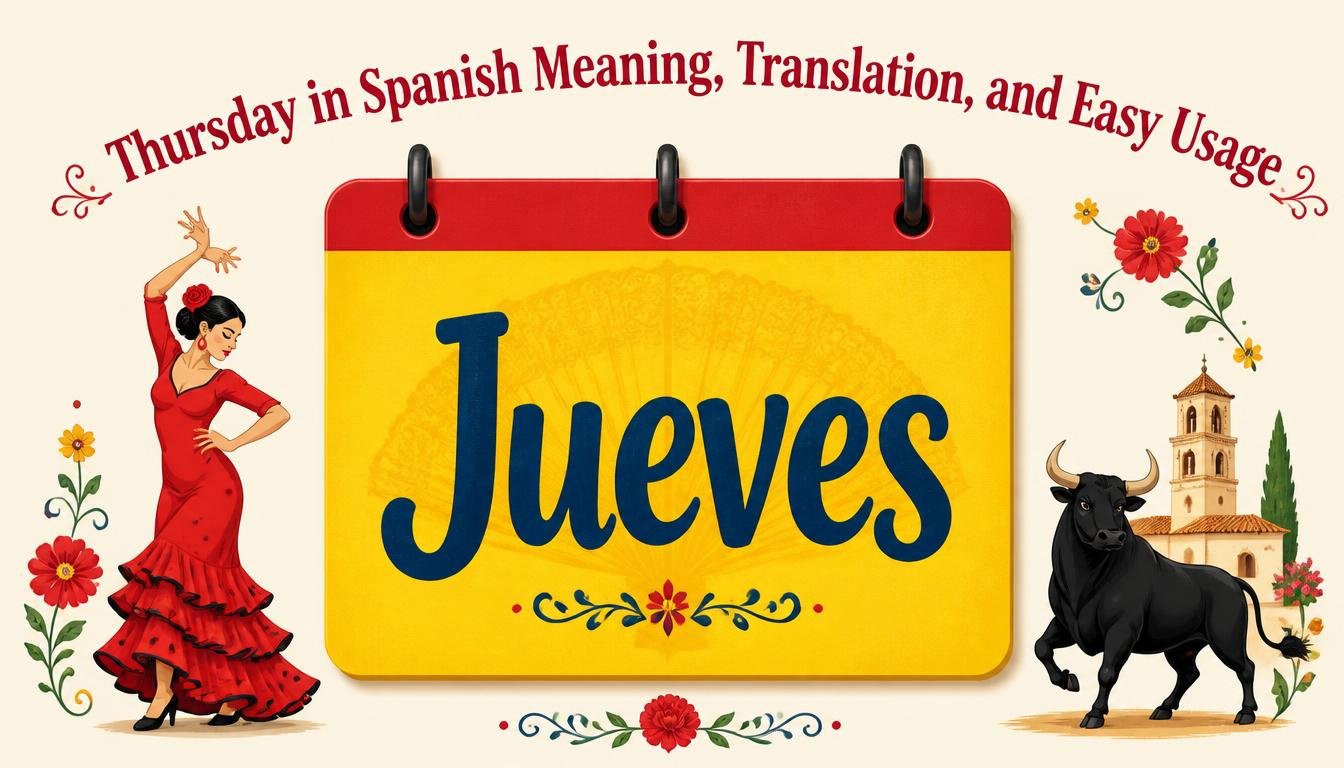
When people search for Thursday in Spanish, they usually want a simple answer, a correct translation, and an easy way to remember it. The Spanish word for Thursday is jueves. If you are studying Spanish, learning the days of the week is one of the first and most important steps because these words appear all the time in writing and speaking. Thursday may seem like a small vocabulary word, but it is useful in many situations, from making appointments to talking about weekly routines and future plans.
It is pronounced in a smooth and natural way, and once you hear it a few times, it becomes easy to remember. Unlike English, Spanish days of the week are not capitalized unless they begin a sentence. That means you write jueves, not Jueves, in normal text. This is a small grammar detail, but it is important for writing correctly and making your Spanish look natural.
If you want to use Thursday in Spanish in a sentence, there are many simple examples you can learn. For instance, you can say El jueves tengo una reunión, which means I have a meeting on Thursday. Another example is Nos vemos el jueves, which means We will see each other on Thursday. These sentences show how the word fits naturally into daily speech.
Spanish days of the week are often taught together because they follow a pattern that makes learning easier. The full set includes lunes for Monday, martes for Tuesday, miércoles for Wednesday, jueves for Thursday, viernes for Friday, sábado for Saturday, and domingo for Sunday. When you study jueves as part of this group, you also begin to see how Spanish vocabulary works as a system. This helps you build confidence faster and improves your memory because the word becomes part of a larger structure instead of an isolated term.
A useful way to remember jueves is to repeat it in common phrases. For example, you can practice saying el jueves, este jueves, todos los jueves, and el próximo jueves. These expressions are extremely useful in everyday Spanish. El jueves means on Thursday, este jueves means this Thursday, todos los jueves means every Thursday, and el próximo jueves means next Thursday. By learning these short phrases, you move beyond translation and start using Spanish in a more natural and practical way.
Another important point is that the Spanish word for Thursday can appear in formal and informal settings. You may hear it in workplace schedules, school calendars, family conversations, and travel plans. For example, a teacher might say La clase es el jueves, meaning The class is on Thursday. A friend might say Vamos al cine el jueves, meaning We are going to the cinema on Thursday. These examples show that jueves is not just a vocabulary word for memorization. It is a real communication word that helps you describe time and organize your week in Spanish.
If your goal is to rank content on Google, then focusing on Thursday in Spanish is a smart topic because it matches a clear search intent. Readers want a direct answer, examples, pronunciation help, and maybe a little grammar support. A useful article should answer the main query quickly and then expand into related details that give the reader more value. That is exactly what strong SEO content does. It satisfies the search intent while also keeping the reader engaged with practical, easy-to-read information.
Understanding Thursday in Spanish can also help with broader language learning goals. Once you know jueves, you can more easily learn the rest of the week, form date expressions, and understand conversations about plans and schedules. Spanish learners often find that these small vocabulary words create a strong foundation.
It is also useful to notice that Spanish pronunciation depends on listening and repetition. The word jueves may look simple in writing, but hearing it in real conversation helps you remember the sound and rhythm. Practice by reading it aloud slowly, then say it inside short sentences. The more often you use the word in context, the faster it becomes natural. This is one of the best ways to move from passive knowledge to active language use.
If you are teaching a child, a beginner student, or even yourself, jueves is a great word to practice because it is short, common, and easy to connect to daily life. You can label calendars, create flashcards, or write weekly plans using Spanish day names. For example, you might write jueves: English class, jueves: family dinner, or jueves: study day. These small exercises make the word more memorable.
The best way to learn Thursday in Spanish is to combine meaning, pronunciation, spelling, and real examples. That combination gives you a full understanding instead of only a translation. When you know that Thursday is jueves, you can read it, say it, write it correctly, and use it in a sentence with confidence. This is what makes language learning effective. A single word becomes useful when you can apply it naturally in daily communication.
Conclusion
The Spanish word for Thursday is jueves, and it is one of the most useful day-of-the-week words for beginners and everyday learners. It appears in schedules, conversations, schoolwork, and travel planning, so knowing it well can improve both your vocabulary and your confidence. When you learn jueves together with its pronunciation, spelling, and common sentence patterns, you build a stronger foundation in Spanish. That is why Thursday in Spanish is a simple topic with real value for learners who want practical progress.
FAQ
FAQ 1. Meaning of Thursday in Spanish
The Spanish word for Thursday is jueves. It is used in the same way English speakers use Thursday when talking about the day of the week.
FAQ 2. Spelling of Thursday in Spanish
The correct spelling is jueves. It starts with j and is written in lowercase in normal Spanish text.
FAQ 3. Pronunciation of Thursday in Spanish
The word jueves is pronounced in a soft, smooth way. Repeating it in short phrases helps with memory and natural pronunciation.
FAQ 4. Example use in a sentence
A common sentence is Nos vemos el jueves, which means We will see each other on Thursday.
FAQ 5. Capitalization rule for Spanish days
Spanish days of the week are usually written in lowercase unless they start a sentence. That is why jueves is normally not capitalized.
Red Angus Cow: Breed Characteristics, Benefits, Care, and Beef Production
Flooding in Auburn WA: Causes, Risks, Safety Tips, and How to Prepare
2025 Mazda CX-90 PHEV: Specs, Range, Price, Features and Complete Review

POCSO Case: Complete Guide to the Protection of Children from Sexual Offences Act, Procedure, Punishment, Rights, and Legal Process

Persona 5 Royal Fusion Calculator: The Ultimate Guide to Perfect Persona Fusion

TPE: 2317 – Complete Guide, Features, Applications, Benefits, and Specifications
 Politics3 months ago
POCSO Case: Complete Guide to the Protection of Children from Sexual Offences Act, Procedure, Punishment, Rights, and Legal Process
- Uncategorized3 months ago
Persona 5 Royal Fusion Calculator: The Ultimate Guide to Perfect Persona Fusion
- Uncategorized3 months ago
TPE: 2317 – Complete Guide, Features, Applications, Benefits, and Specifications
- Business3 months ago
Mietmakler: The Complete Guide to Rental Brokers, Benefits, Costs, and Finding the Perfect Rental Property
- Celebrity3 months ago
Jimmy Harrell: Biography, Career, Achievements, Legacy, and Interesting Facts
- News3 months ago
AC Breaking News: Latest Headlines, Breaking Stories, Live Updates, and Trending News
- Lifestyle3 months ago
Marshall Tools Bricky: The Complete Guide to Professional Bricklaying Tools
- Entertainment3 months ago
Star Wars Movie FX Maker Codes: Complete Guide to Unlock Effects, Characters, and Hidden Features