
Finance
Coinflation: The Complete Guide to Coin Melt Value, Precious Metal Prices, and Smart Coin Investing

Published
6 days agoon
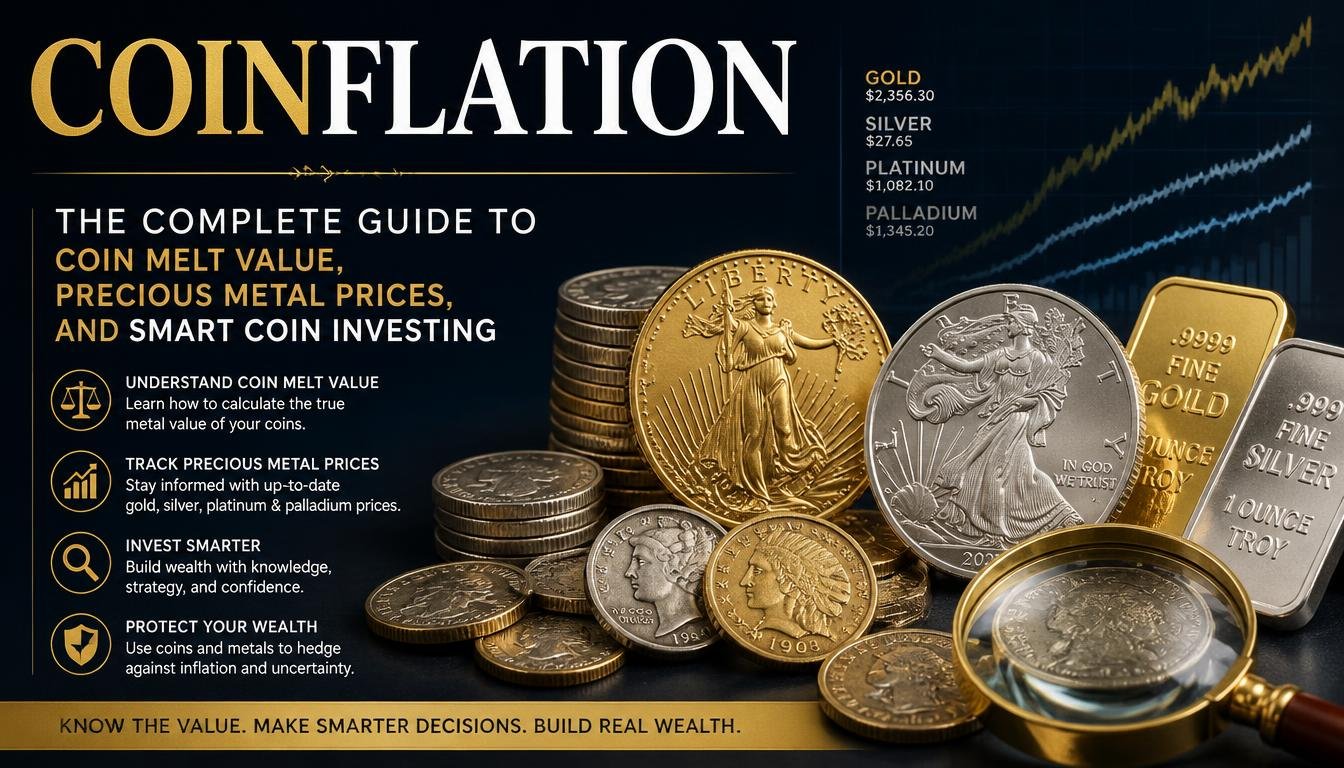
Table of Contents
ToggleCoin collecting has evolved far beyond a simple hobby. Millions of people now purchase silver and gold coins as long-term investments, inflation hedges, and wealth preservation assets. As precious metal prices fluctuate every day, knowing the actual intrinsic value of a coin becomes increasingly important. This is where Coinflation plays a significant role. Whether you own old U.S. silver quarters, gold Eagles, Canadian Maple Leafs, or historical bullion coins, understanding their melt value helps you make informed buying and selling decisions.
Coinflation has become one of the most recognized resources for calculating the intrinsic value of coins based on their precious metal content. Instead of relying only on collector demand, users can quickly determine how much silver, gold, platinum, or other metals are contained within a coin and estimate its current market value. This information is particularly valuable for investors, collectors, coin dealers, and anyone interested in precious metals. In this comprehensive guide, you’ll learn what Coinflation is, how it works, why melt value matters, how to calculate coin prices, and the best practices for investing in precious metal coins.
What Is Coinflation?
Coinflation is a resource that estimates the intrinsic or melt value of coins by combining their precious metal content with current market prices. Rather than focusing on rarity or collectible appeal, Coinflation emphasizes the underlying value of the silver, gold, platinum, or other metals contained within a coin.
For example, a U.S. silver quarter minted before 1965 contains approximately 90% silver. Even if its face value is only twenty-five cents, the silver inside may be worth several dollars depending on current silver prices. Coinflation calculates this value automatically, helping users understand whether a coin’s intrinsic worth exceeds its denomination.
The platform serves as an educational and practical tool for investors, collectors, pawn shops, bullion dealers, and individuals who inherit coin collections.
How Coinflation Works
Coinflation operates by combining several pieces of information to estimate melt value accurately. First, it identifies the exact metal composition of a particular coin. Different coins contain varying percentages of silver, gold, platinum, copper, or nickel depending on their mint year and country of origin. Once the metal composition is known, Coinflation references current precious metal spot prices and multiplies those prices by the weight of the precious metal contained within the coin.
The result is an estimated melt value that changes throughout the day as precious metal prices fluctuate. This dynamic pricing allows investors to track the intrinsic value of their holdings without performing complicated manual calculations.
Understanding Coin Melt Value
Melt value represents the value of the precious metal inside a coin if it were melted down and sold strictly for its metal content. It does not include collector premiums, historical significance, rarity, grading, or sentimental value.
For investors focused on bullion, melt value often serves as the baseline for determining whether a purchase or sale is financially reasonable. However, collectors should remember that many rare coins sell for significantly more than their melt value because of historical importance, limited mintage, or exceptional condition.
Why Coinflation Is Popular Among Investors
Investors appreciate Coinflation because it provides transparency in an often confusing market. Precious metal prices change every minute, making manual calculations difficult for beginners. Coinflation simplifies this process by updating values automatically based on live market conditions.
This transparency helps buyers avoid overpaying for bullion while also assisting sellers in negotiating fair prices. Coin dealers frequently use melt value as the starting point before adding premiums based on demand, rarity, and condition.
Coinflation for Silver Coins
Silver coins remain one of the most commonly searched categories on Coinflation. Many older United States coins minted before 1965 contain 90% silver, making them significantly more valuable than their face value. Investors also use Coinflation to monitor the value of Morgan Dollars, Peace Dollars, Kennedy Half Dollars, Roosevelt Dimes, and Washington Quarters.
Silver investors often purchase so-called “junk silver” coins because they offer a practical way to own physical silver while carrying historical significance. Coinflation helps determine whether market prices align with the underlying silver content.
Coinflation for Gold Coins
Gold coins generally carry higher values because gold itself commands a premium in global markets. Popular investment coins include American Gold Eagles, Canadian Maple Leafs, South African Krugerrands, and Austrian Philharmonics.
Coinflation estimates the melt value based on the amount of pure gold contained within each coin. Investors use this information to compare dealer premiums, evaluate buying opportunities, and monitor portfolio performance.
Coinflation Calculator Explained
One of the most useful features associated with Coinflation is its calculator. Instead of manually calculating metal weight, purity, and current spot prices, users simply select the coin type and receive an instant estimate.
The calculator typically considers:
- Coin type
- Mint year
- Metal purity
- Precious metal weight
- Current spot price
- Estimated melt value
This saves time while reducing the likelihood of calculation errors.
Melt Value vs Collector Value
Many beginners assume that melt value and collector value are identical, but they are often very different. Melt value reflects only the precious metal contained within a coin, while collector value depends on scarcity, historical importance, mint errors, demand, grading, and overall condition.
For example, two silver dollars with identical silver content may have dramatically different market prices because one is rare while the other is common. Understanding this distinction helps investors avoid costly mistakes.
Benefits of Using Coinflation
Coinflation provides several advantages for both new and experienced investors. It offers a fast way to estimate intrinsic value, improves price transparency, supports informed buying and selling decisions, and serves as an educational resource for understanding precious metals. By monitoring changes in silver and gold prices, users can also identify favorable times to expand or reduce their holdings.
Factors That Influence Coin Prices
Although melt value is important, several additional factors affect the overall market value of a coin. These include precious metal spot prices, coin rarity, mint marks, historical significance, grading by professional services, collector demand, economic uncertainty, inflation expectations, and overall bullion market conditions. A complete valuation considers both intrinsic metal content and numismatic appeal.
Tips for Buying Precious Metal Coins
Successful coin investing requires careful research and patience. Always compare dealer premiums, verify authenticity, understand the difference between bullion and collectible coins, store precious metals securely, and diversify holdings across different metals when appropriate. Checking melt value before making a purchase provides a useful benchmark, but it should not be the sole factor in your decision.
Common Mistakes Beginners Make
Many first-time investors mistakenly focus only on melt value while ignoring collector premiums or authenticity. Others overpay because they fail to compare multiple dealers or assume every old coin is rare. Another common mistake is overlooking storage, insurance, and transaction costs. Learning how melt value fits into the broader coin market can help you avoid these pitfalls.
Is Coinflation Accurate?
Coinflation estimates are generally accurate because they are based on the published metal composition of coins and current spot prices. However, the final price you receive when buying or selling may differ due to dealer premiums, transaction fees, taxes, shipping costs, and collector demand. As a result, Coinflation should be viewed as an informative pricing reference rather than a guaranteed purchase or sale price.
Conclusion
Coinflation has become an essential resource for anyone interested in precious metal coins, whether they are investors, collectors, or casual enthusiasts. By estimating the melt value of coins using current precious metal prices, it provides a reliable starting point for evaluating silver, gold, platinum, and other bullion-based coins. While melt value represents only one aspect of a coin’s overall worth, understanding it allows buyers and sellers to negotiate with greater confidence and make more informed financial decisions. As the precious metals market continues to evolve, combining Coinflation data with knowledge of rarity, condition, and market demand remains the most effective approach to assessing a coin’s true value.
Frequently Asked Questions (FAQ)
What is Coinflation?
Coinflation is a tool that estimates the intrinsic melt value of coins using their precious metal content and current market prices.
Is Coinflation free to use?
Yes, basic melt value calculations and coin value information are generally available without charge.
Does Coinflation show collector value?
No. It primarily estimates melt value, not collectible or numismatic premiums.
What is melt value?
Melt value is the value of the precious metal contained inside a coin based on current spot prices.
Why does melt value change every day?
Because gold, silver, platinum, and other precious metal prices fluctuate continuously in global markets.
Is melt value the same as selling price?
Not always. Dealers may pay more or less depending on market conditions, premiums, demand, fees, and the coin’s collectible value.
Can Coinflation be used for gold coins?
Yes. It can estimate the melt value of many gold coins based on their gold content.
Is Coinflation useful for beginners?
Absolutely. It simplifies precious metal valuation and helps new investors understand the relationship between metal prices and coin values.
What is junk silver?
Junk silver refers to older circulating coins that contain silver and are primarily valued for their metal content rather than rarity.
Should I buy coins based only on melt value?
No. Melt value is an important benchmark, but rarity, condition, authenticity, premiums, and long-term demand should also be considered before making investment decisions.
You may like
Finance
Barchart Soybeans: Complete Guide to Soybean Prices, Futures, Charts, and Market Trends
Published
4 weeks agoon
July 14, 2026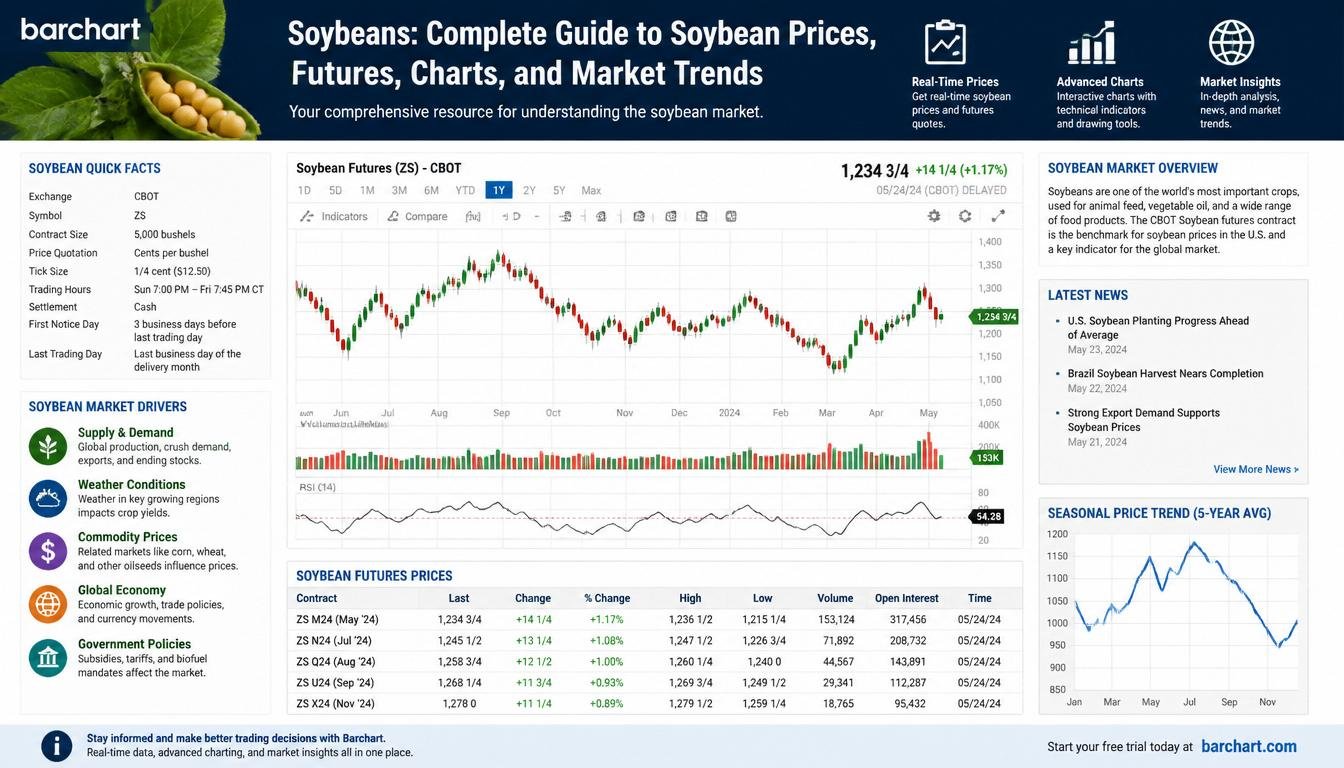
Table of Contents
ToggleThe global soybean market plays an essential role in agriculture, food production, livestock feed, and biofuel manufacturing. Every day, millions of traders, farmers, exporters, and investors monitor soybean prices to make informed business decisions. One of the most trusted platforms for tracking soybean market activity is Barchart Soybeans, a comprehensive financial resource that provides real-time futures prices, technical charts, historical data, market news, and trading indicators. Whether you are a professional commodity trader or someone simply interested in understanding agricultural markets, Barchart Soybeans offers valuable insights that help you analyze price movements and predict market trends.
Soybean prices are influenced by numerous factors including weather conditions, crop production, export demand, global supply chains, government policies, currency exchange rates, and economic conditions. Monitoring these variables manually can be difficult, which is why traders rely on platforms like Barchart. The platform combines live market information with technical analysis tools, allowing users to evaluate price momentum, identify trends, and develop effective trading strategies. This guide explores everything you need to know about Barchart Soybeans, including how it works, why it is popular among traders, and how to use its features for smarter investment decisions.
What Is Barchart Soybeans?
Barchart Soybeans refers to the soybean market section available on the Barchart financial platform, where users can access real-time soybean futures prices, interactive price charts, technical indicators, historical market performance, seasonal trends, and agricultural news. The platform gathers data from commodity exchanges and presents it in an easy-to-understand format suitable for both beginners and experienced market participants.
Unlike basic price trackers, Barchart offers a complete market analysis environment. Users can study candlestick charts, moving averages, Relative Strength Index (RSI), MACD indicators, Bollinger Bands, volume analysis, and price forecasts. These analytical tools help traders understand market sentiment and identify potential buying or selling opportunities.
Why Barchart Soybeans Is Popular Among Traders
The popularity of Barchart Soybeans comes from its combination of speed, accuracy, and analytical depth. Commodity markets change rapidly throughout the trading day, making real-time information essential for profitable decision-making. Barchart updates market prices continuously while also providing news articles, technical ratings, and expert commentary that explain why prices are moving.
Another advantage is the platform’s user-friendly interface. Beginners can easily view current soybean prices and simple charts, while professional traders can access advanced indicators, customizable chart settings, and detailed historical data. This flexibility makes the platform useful for a wide range of users, including farmers, agricultural businesses, commodity brokers, hedge funds, and retail investors.
Understanding Soybean Futures
Soybean futures are standardized contracts that allow buyers and sellers to agree on a soybean price for delivery at a future date. These contracts are traded on commodity exchanges and help manage price risk. Farmers use futures contracts to lock in selling prices before harvest, while food manufacturers secure future supplies to stabilize production costs.
Investors and traders participate in soybean futures primarily for speculation. By analyzing market trends using Barchart Soybeans, traders attempt to profit from price fluctuations without physically buying or selling soybeans. This financial market provides liquidity while helping agricultural businesses reduce uncertainty.
Features of Barchart Soybeans
One of the biggest strengths of Barchart Soybeans is its extensive collection of market analysis tools. Users can monitor live soybean futures prices, compare multiple contract months, examine historical performance, and evaluate seasonal price patterns. Interactive charts allow traders to customize technical indicators based on their preferred trading strategies.
The platform also includes market news, analyst opinions, price alerts, economic calendars, weather updates, export reports, and USDA announcements that often influence soybean prices. Having all these resources in one location saves time and improves market awareness.
Technical Analysis Using Barchart Soybeans
Technical analysis is one of the most valuable aspects of Barchart Soybeans. Instead of focusing solely on supply and demand, technical analysis studies historical price movements to identify patterns that may repeat in the future. Traders frequently use moving averages to determine trend direction, RSI to identify overbought or oversold conditions, and MACD to detect momentum changes.
Candlestick charts provide additional insights into daily market psychology by illustrating opening, closing, highest, and lowest prices. Combining multiple technical indicators often produces more reliable trading signals than relying on a single metric.
Factors That Influence Soybean Prices
Soybean prices fluctuate because of several interconnected factors. Weather conditions remain one of the most significant influences since droughts, floods, and extreme temperatures directly affect crop yields. Strong export demand from major importing countries can increase prices, while surplus production may lead to lower prices due to oversupply.
Government agricultural policies, interest rates, transportation costs, currency fluctuations, and global economic conditions also contribute to soybean market volatility. Regularly monitoring these variables through Barchart Soybeans enables traders to anticipate potential market changes before they occur.
Benefits of Using Barchart Soybeans
Using Barchart Soybeans provides numerous advantages for market participants. Real-time pricing helps traders respond quickly to changing market conditions, while advanced charting tools improve technical analysis. Historical data allows users to compare current market behavior with previous trends, making it easier to identify recurring seasonal patterns.
Price alerts notify users when soybeans reach specific price levels, reducing the need for constant market monitoring. Additionally, integrated news coverage ensures traders stay informed about important developments affecting agricultural commodities worldwide.
Tips for Beginners
New traders should begin by learning the basics of soybean futures before risking capital. Practicing chart analysis using historical data helps develop pattern recognition skills without financial pressure. It is also important to understand risk management techniques, including stop-loss orders and proper position sizing.
Beginners should avoid making decisions based solely on emotions or short-term price fluctuations. Instead, combining technical analysis with fundamental market information provides a more balanced approach to commodity trading.
Common Trading Strategies
Many soybean traders use trend-following strategies that aim to profit from sustained price movements. Others prefer breakout trading, where positions are entered after prices move beyond established support or resistance levels. Swing traders focus on medium-term price fluctuations lasting several days or weeks, while day traders capitalize on smaller intraday price changes.
Regardless of strategy, successful traders consistently use risk management, maintain trading discipline, and review market conditions before entering positions.
Conclusion
Barchart Soybeans has become one of the leading resources for monitoring soybean prices, analyzing futures markets, and making informed commodity trading decisions. Its combination of real-time data, advanced charting capabilities, technical indicators, historical records, and market news makes it valuable for traders, investors, farmers, and agricultural professionals alike. Understanding soybean market fundamentals while using Barchart’s analytical tools can improve trading confidence and support more informed financial decisions. Although no platform can guarantee profitable trades, combining education, disciplined risk management, and consistent market analysis greatly increases the likelihood of long-term success in the soybean futures market.
Frequently Asked Questions (FAQs)
1. What is Barchart Soybeans?
Barchart Soybeans is a market information platform that provides live soybean futures prices, interactive charts, technical analysis tools, historical data, and agricultural market news.
2. Is Barchart Soybeans free to use?
Many features are available for free, while advanced charting tools, premium market data, and professional analysis may require a subscription.
3. Who uses Barchart Soybeans?
Commodity traders, investors, farmers, agricultural businesses, analysts, and financial institutions use the platform to monitor soybean market activity.
4. Can beginners use Barchart Soybeans?
Yes. The platform offers simple price charts and educational resources suitable for beginners, while also providing advanced tools for experienced traders.
5. Why do soybean prices change every day?
Soybean prices fluctuate because of weather conditions, global supply and demand, export activity, government policies, currency movements, transportation costs, and broader economic factors.
6. What technical indicators are commonly used on Barchart Soybeans?
Popular indicators include Moving Averages, RSI (Relative Strength Index), MACD (Moving Average Convergence Divergence), Bollinger Bands, volume analysis, and candlestick patterns.
7. Is Barchart Soybeans useful for long-term investors?
Yes. Historical price data, seasonal trends, and market analysis can help long-term investors evaluate broader commodity market opportunities.
8. How can I improve my soybean trading decisions?
Study both technical and fundamental analysis, monitor global agricultural news, use risk management strategies, and regularly review charts and market reports before placing trades.

How to Change WiFi Channel: A Complete Guide to Faster and More Reliable WiFi

Moz Keyword Explorer: Complete Guide to Keyword Research, Features, Benefits, and How to Use It for SEO

Moz Affiliate Program Review: How to Join, Earn Commissions, and Promote Moz

POCSO Case: Complete Guide to the Protection of Children from Sexual Offences Act, Procedure, Punishment, Rights, and Legal Process

Persona 5 Royal Fusion Calculator: The Ultimate Guide to Perfect Persona Fusion

TPE: 2317 – Complete Guide, Features, Applications, Benefits, and Specifications
Trending
 Politics1 month ago
POCSO Case: Complete Guide to the Protection of Children from Sexual Offences Act, Procedure, Punishment, Rights, and Legal Process
- Uncategorized1 month ago
Persona 5 Royal Fusion Calculator: The Ultimate Guide to Perfect Persona Fusion
- Uncategorized1 month ago
TPE: 2317 – Complete Guide, Features, Applications, Benefits, and Specifications
- Business1 month ago
Mietmakler: The Complete Guide to Rental Brokers, Benefits, Costs, and Finding the Perfect Rental Property
- News1 month ago
AC Breaking News: Latest Headlines, Breaking Stories, Live Updates, and Trending News
- Entertainment1 month ago
Star Wars Movie FX Maker Codes: Complete Guide to Unlock Effects, Characters, and Hidden Features
- Celebrity1 month ago
Jimmy Harrell: Biography, Career, Achievements, Legacy, and Interesting Facts
- News1 month ago
Gila Herald: Your Complete Guide to Local News, Community Updates, and Arizona Events